

I recently got caught up in an unexpected tumble down: the rabbit hole of visual associations. I was looking at the images created by the group who went on our second teen photo walk.
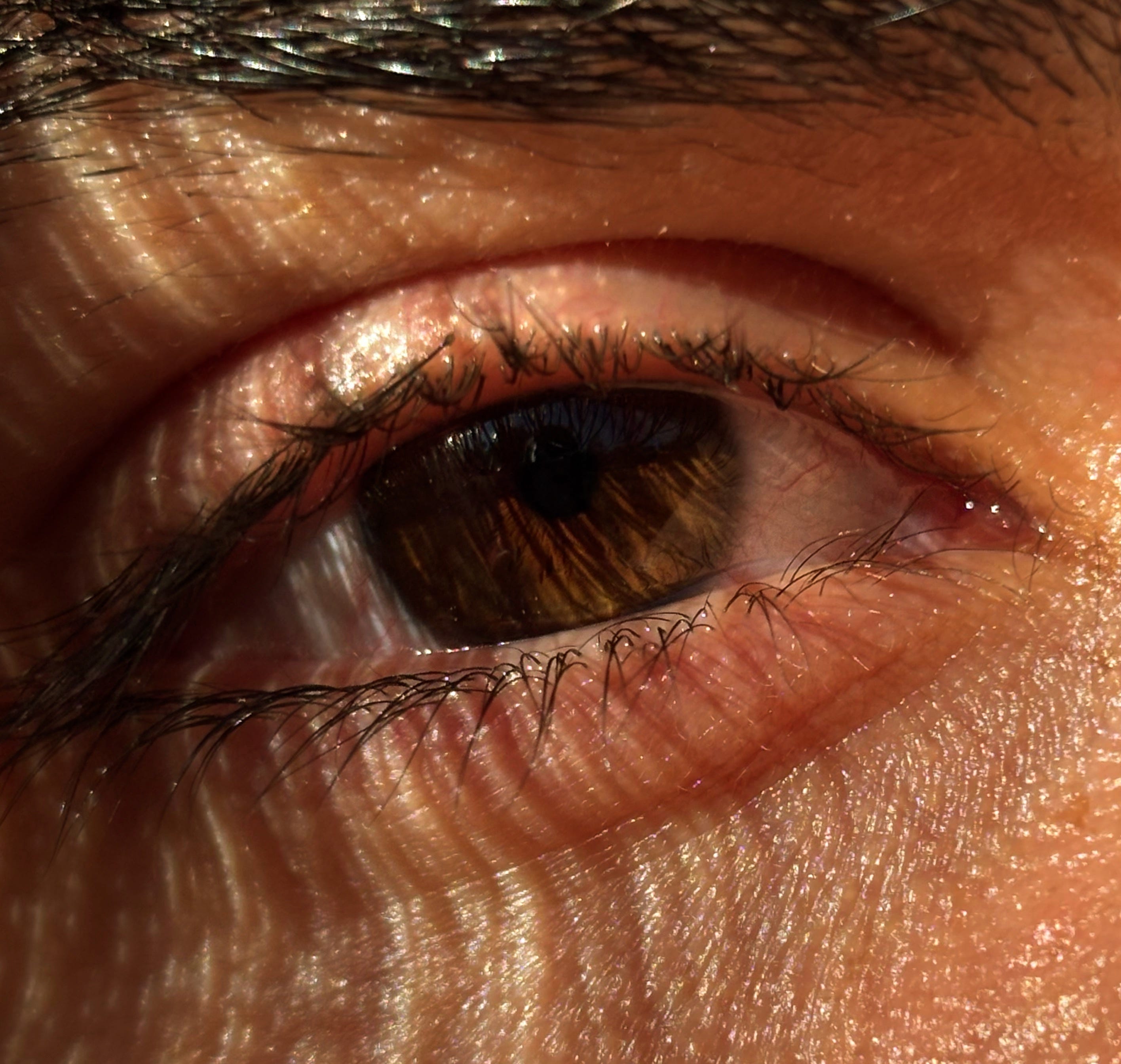
As soon as I saw Catarina’s striking photograph of the eye close-up, it made me think of Man Ray’s famous image, “Tears”.
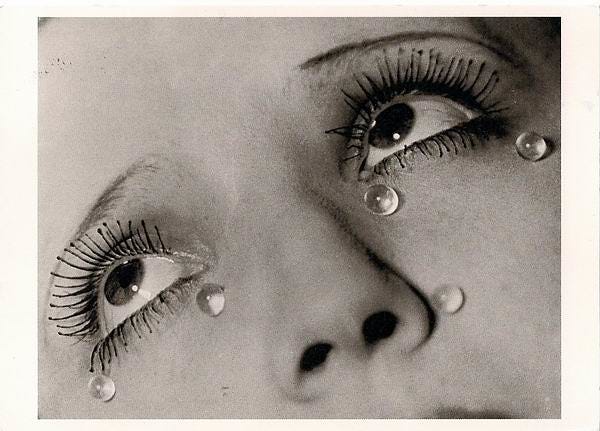
An upturned female gaze with the typical overplucked eyebrows of that time (1932), mascara meticulously brushed on eyelashes and a sprinkling of clear glass tears.
The iconic photograph is believed to have been made after Man Ray’s breakup with Lee Miller, his muse and lover. In her own right, she was a model turned war photojournalist. Whatever the actual circumstances of their breakup, the glass tears seem to imply that there was some emotional artifice.
Fun fact: “Tears” is very likely the reference for one of the shots in Quentin Tarantino’s film Pulp Fiction.

Another fun fact: Man Ray was one of the leading figures in the surrealist and Dada movements. Romanian artist and poet Tristan Tzara is remembered as the father of the anti-establishment Dadaism - dada translates to “yeah, yeah” in Romanian.
It’s like playing six degrees of separation with visual references. Fun, right?
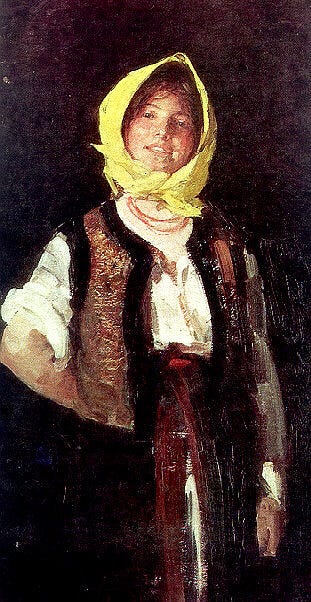
Another image that comes to mind is “Țărancă voioasă” (Cheerful Peasant Woman), an 1894 oil painting by Nicolae Grigorescu. There’s something about that similar quality of light and slight tilt of the head that seems to echo Catarina’s image. Grigorescu is another legacy artist, regarded as one of the founders of modern Romanian art.
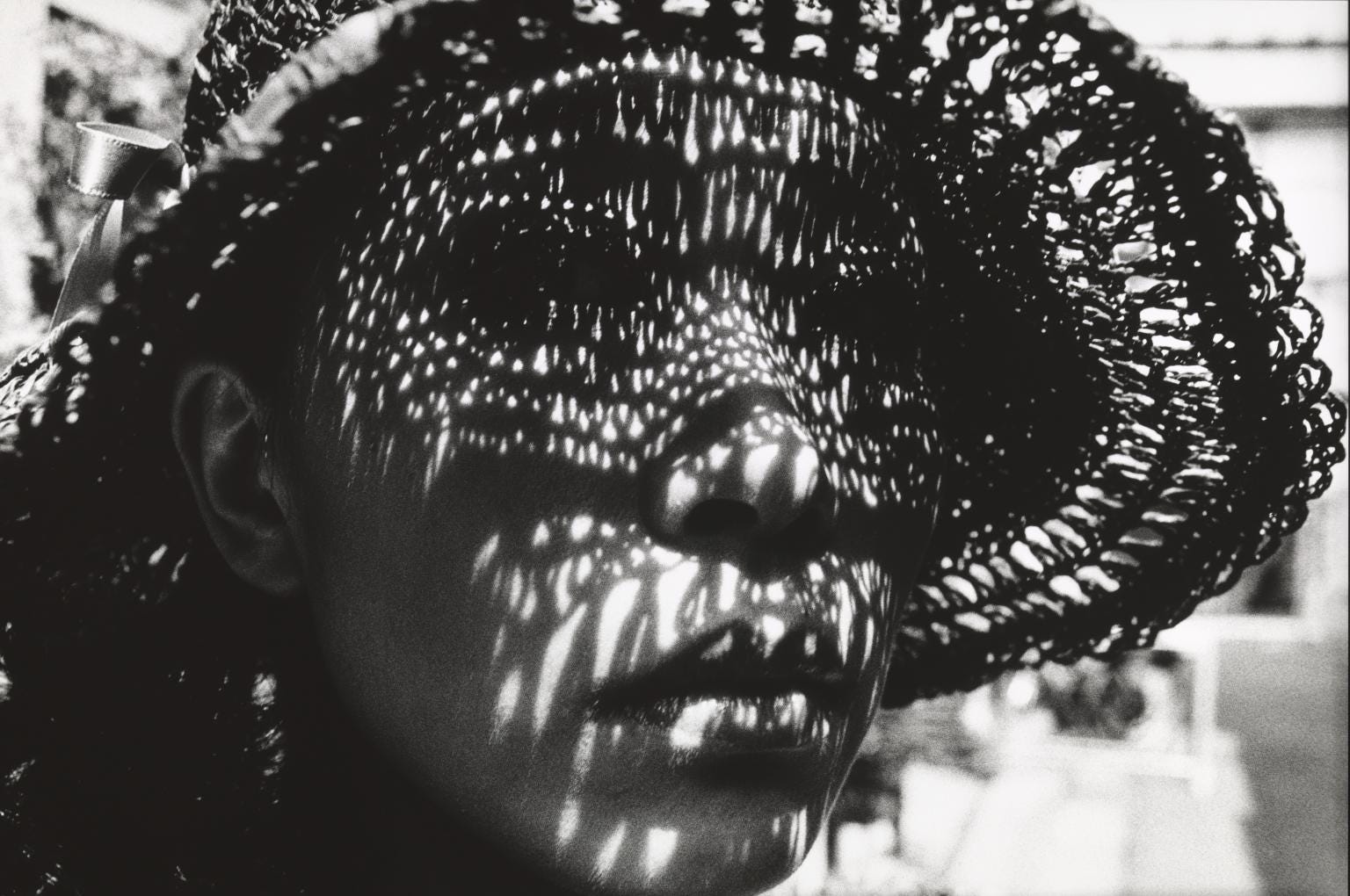
There’s also this black-and-white portrait by Japanese photographer Daido Moriyama from his Memory series. Here the connecting thread is marked by the dramatic shadows on the woman’s face. But unlike Catarina’s expressive photograph, the high contrast in Moriyama’s image presents an unexpected feeling of ambiguity created by the virtual abyss in the woman’s eyes.

If I take a step back from the shadows and focus more on the light source and expression, I could also include this portrait by photographer Bruce Gilden, who is known for using a bright flash on his unsuspecting targets. It’s really one of his kinder portraits.
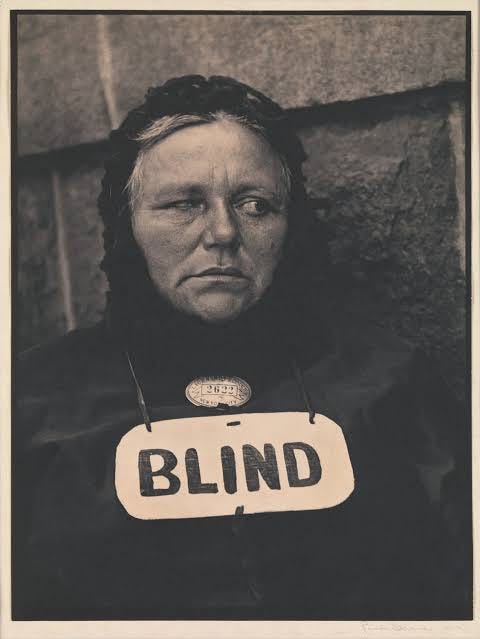
Last one - I know, it’s a bit of a stretch.
Now, while Catarina’s image sparked a game Telephone with visual references, I was delighted by the variety of composition techniques the group used on their photo walk.

Ariana’s landscape of the Juanita Bay boldly raised the horizon, which draws the viewer’s gaze to the foreground. The tilt of the camera also emphasises the vastness and proximity to the body of water. Does this perspective give you a slight unease, as if the water is barely contained in the frame?
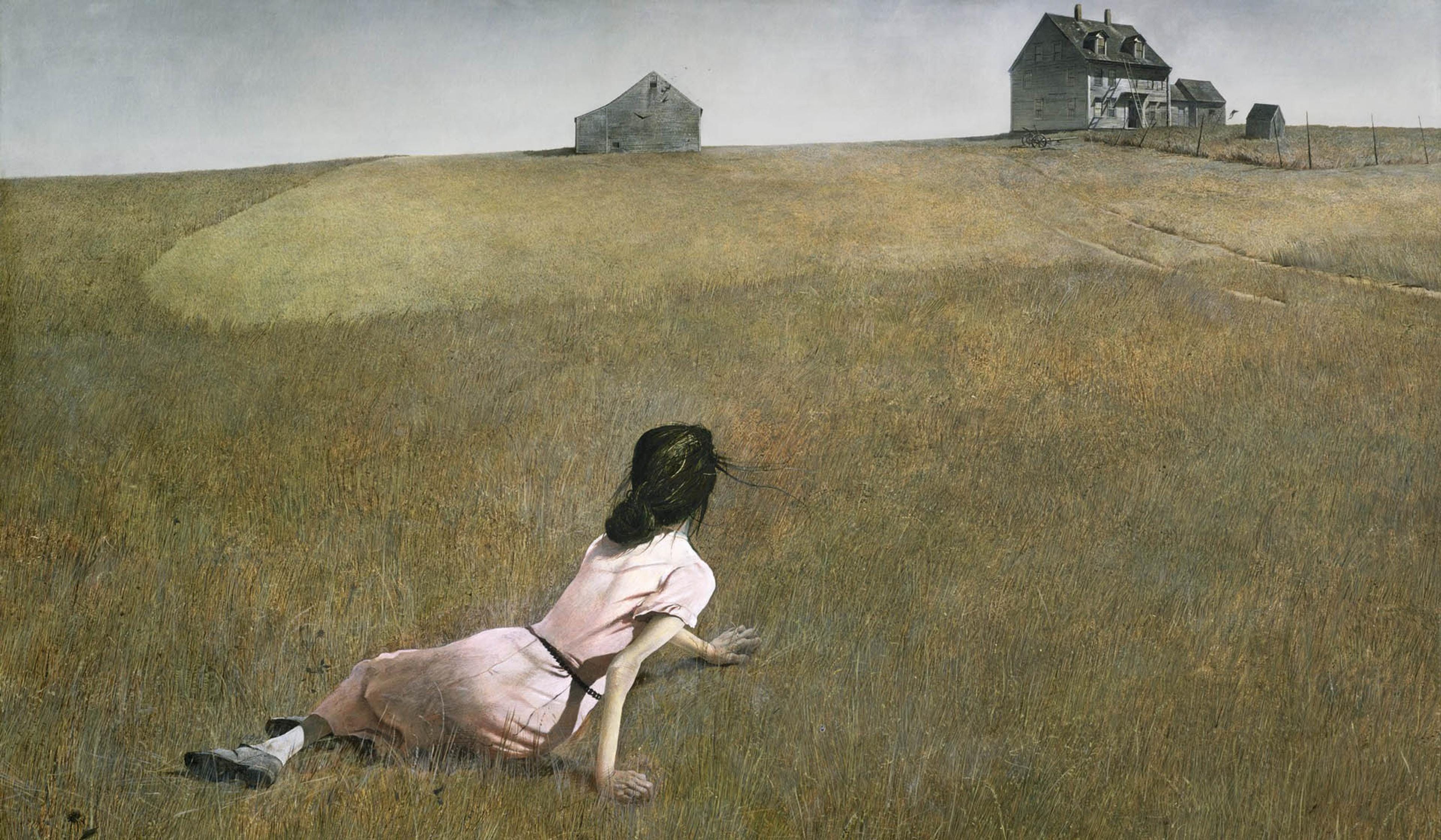
I first thought of Andrew Wyeth’s painting, “Cristina’s World” (1948), but there are, of course, many examples of this technique in Romanian art. “Despărțirea din urmă” (The Final Parting) by George Ștefănescu-Râmnic (1982).
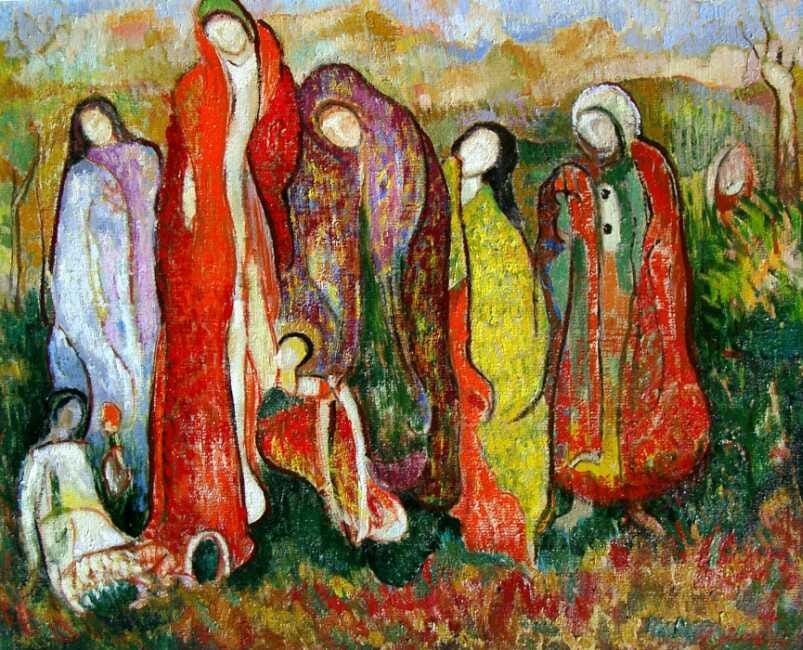
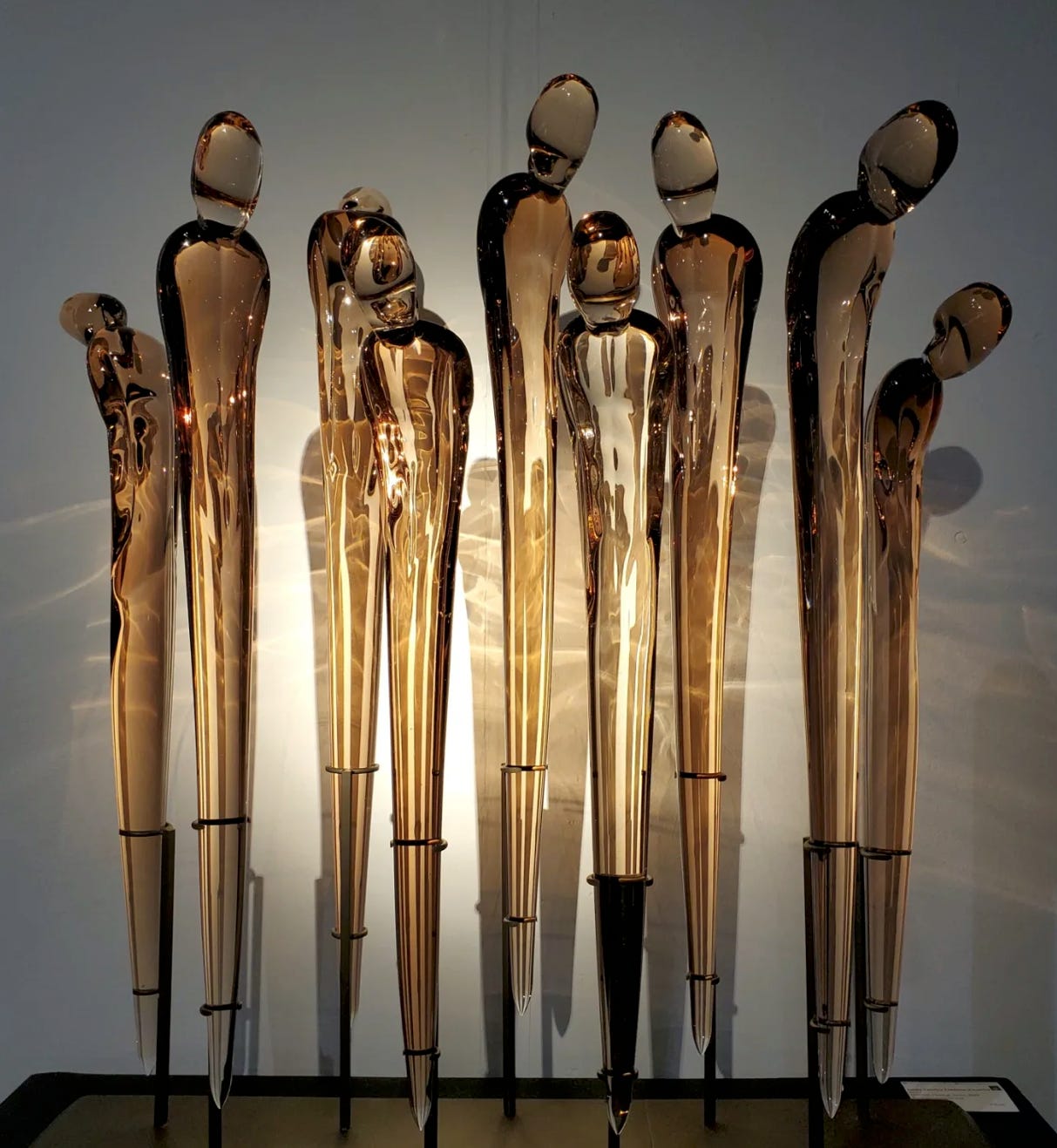
Stretching that thread again… the silhouettes in the above painting also remind me of this glass sculpture I saw at the Seattle Art Fair a few years ago. This is blown and hot sculpted glass by Jenny Pohlman and Sabrina Knowles.
Sabina and Sorana both used the concept of frame within a frame, as a visual element to create a border inside the image and guide the viewer’s eye.


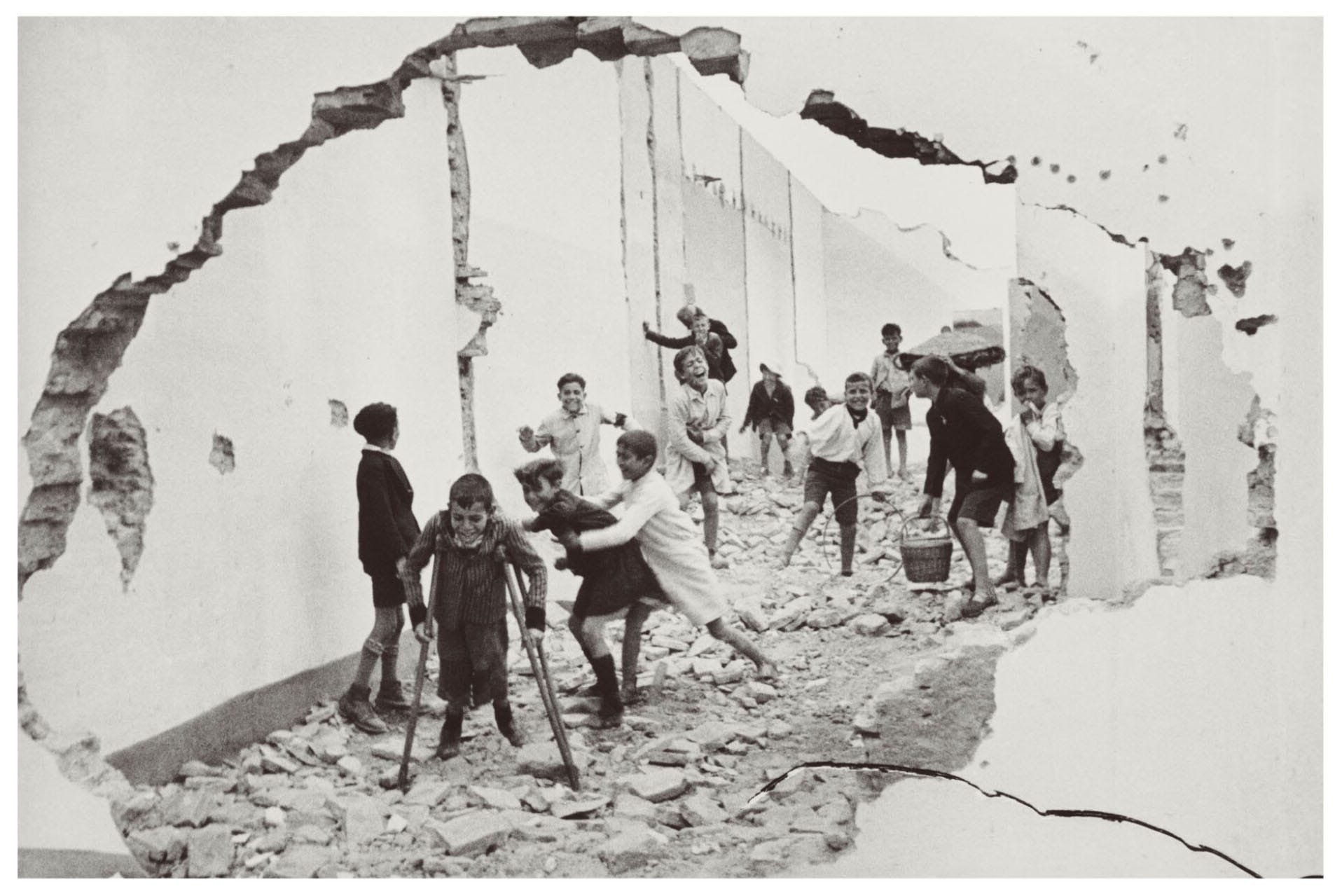
In his photograph, Henri Cartier-Bresson uses the hole in the wall to focus the viewer’s gaze on the children playing. It also adds some context to the scene, highlighting the contrast of the children adapting to the consequences of political turmoil. It acts as a punctum—what Barthes describes as the detail that pierces the viewer.
In Sabina’s photo, the great blue heron stands out as the clear subject. This is achieved by the use of negative space. Without any other distracting elements in the frame, as the eye goes directly to the subject.

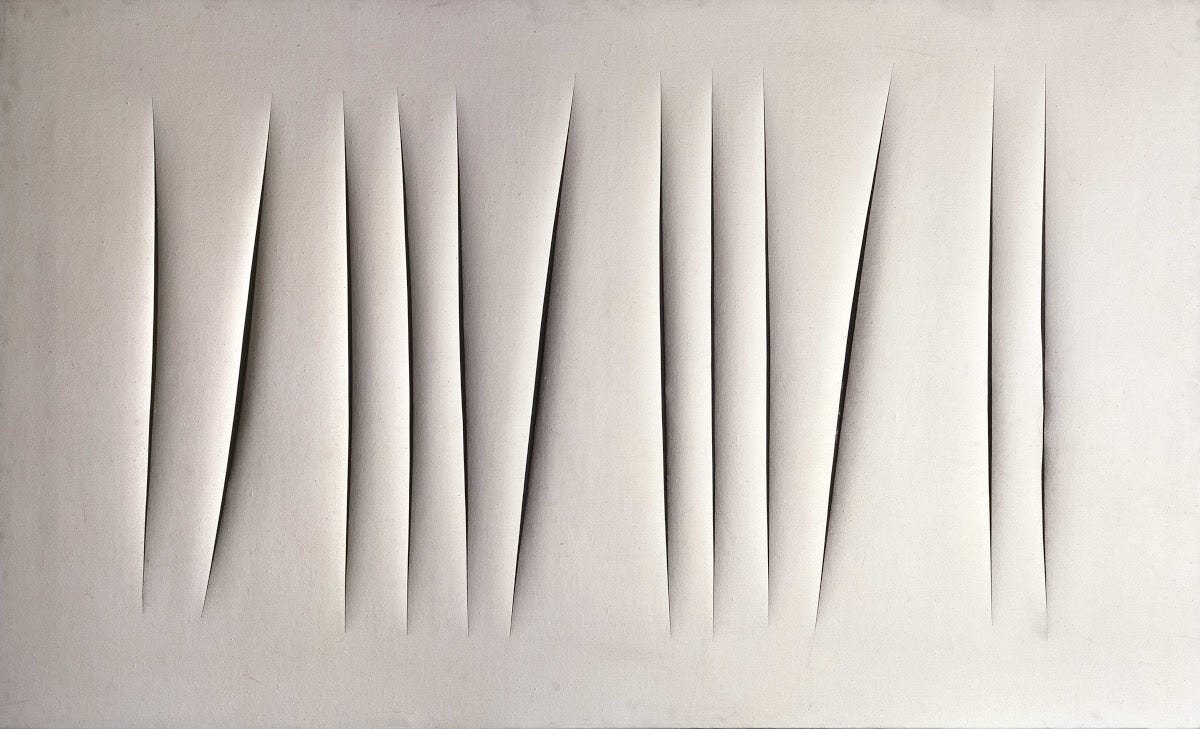
This is Lucio Fontana’s “Spatial Concept, Waiting” (1960). A clean, white canvas dissected by sharp cut lines. It’s simple, powerful and complete.
There are plenty of rules to follow, but ultimately how an image is created comes down to a personal formula of artistic control, instinct, and intent. Do you want to be subtle, create tension, or inspire a feeling of whimsy?
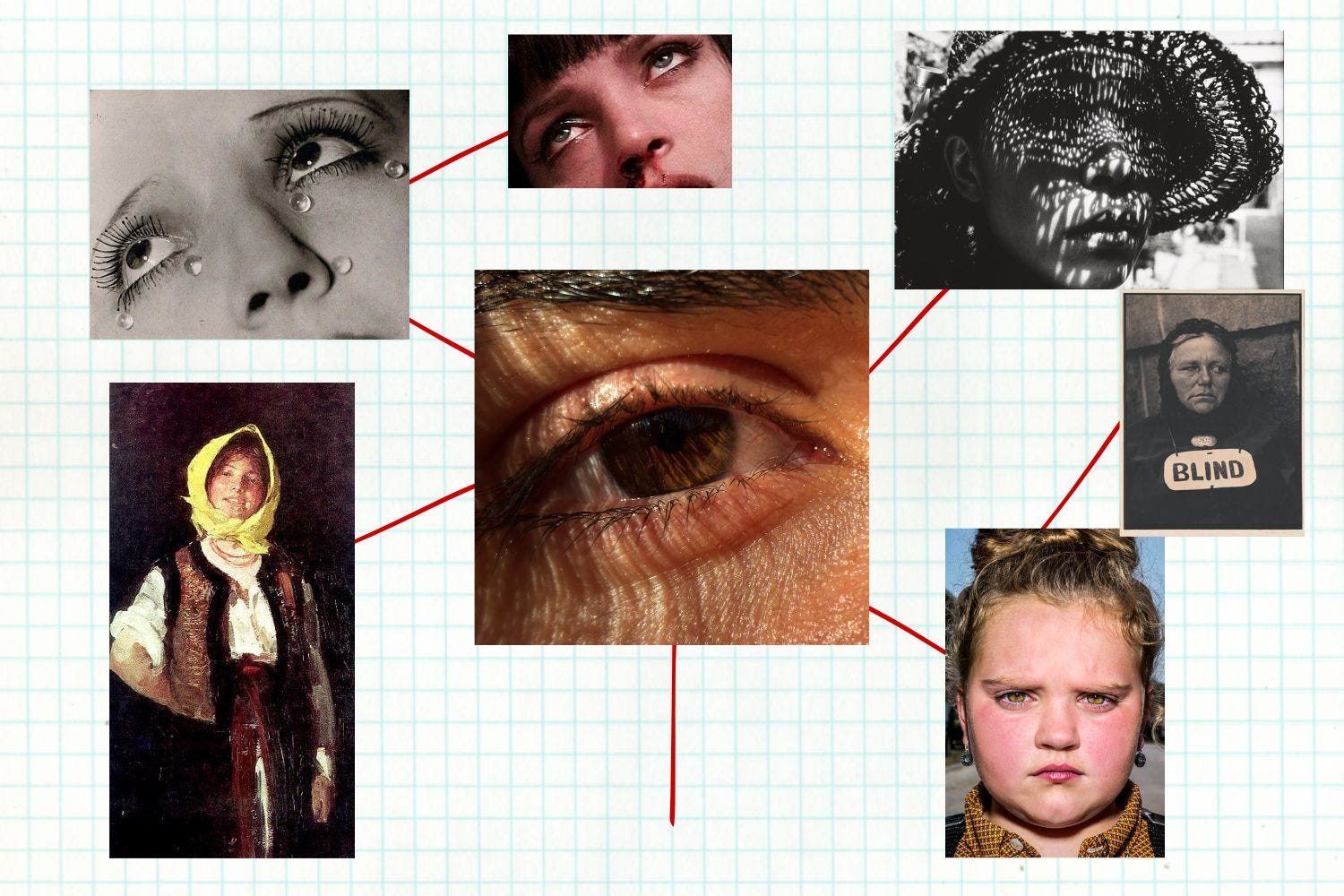
Gabi's informed and imaginative artistic connections are stunning. The ability to see and to read into images is an art that engages both creative and critical intelligence. I really enjoyed following how Gabi created a dialogue between artists and their works.