

Iulia Rugină is a Romanian film director, screenwriter, and producer known for her accessible comedies and relationship-focused films that have brought commercial success to contemporary Romanian cinema.
She began her career with short films including Vineri în jur de 11 (2006) and Stuck on Christmas (2010), often serving as both director and co-writer, before making her feature debut with Love Building (2013). This low-budget comedy, inspired by an acting workshop and centered on couples in therapy, achieved notable box-office success in Romania and screened at numerous international festivals. Rugina's later works include the drama Breaking News (2017), which explores darker themes, and more recent projects such as the film Playback (2022) and the TV series Ruxx (2022). Her films have been presented at over 50 events across 13 countries, reflecting her growing presence in European cinema. Beyond directing, she is actively involved in film education as a trainer for amateurs and children, and she co-founded a cultural association dedicated to promoting film literacy. Rugina has advocated for Romanian cinema to bridge the gap between arthouse traditions and audience-friendly entertainment, emphasizing the need for uplifting stories and greater public trust in local productions. (extract from Iulia Rugina — Grokipedia)
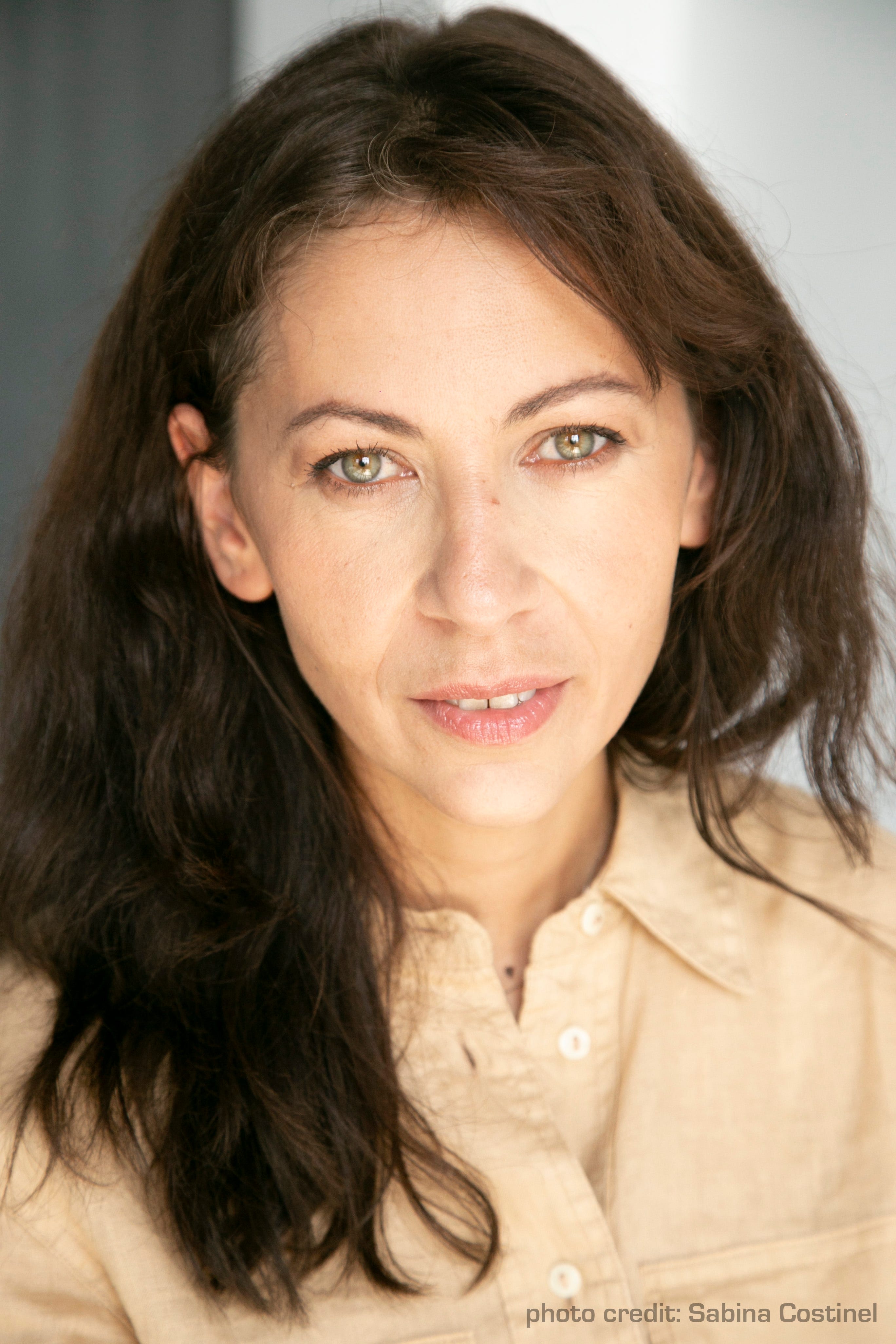
You are a film director, yet in 2009 you co-founded Control N, a cultural non-profit, with screenwriters Oana Răsuceanu and Ana Agopian. Why does a filmmaker decide to found a cultural organization?
All three of us had recently graduated from film school and we had all been involved in a mild form of non-formal pedagogy revolving around film and storytelling, whether through workshops or small projects we would do for extra money during film school. We all loved the joy of giving out information, recomending films, opening young people’s eyes to the wonderful world of cinema, which we all loved. We also felt the need to share what we had learned, especially since we had lacked that input in our high school years – there was absolutely no form of education involving cinema in the high school curricula at that time, no talk about cinema in the educational system. I remember we set up a meeting with a representative of the mayor’s office and asked if they could support us in going in schools and teaching films to children or teenagers. We would do it for free, we weren’t asking for money, we were asking for permission. They said no – bureaucracy, legal concerns, too much complication, a long list of excuses. So that’s when the idea came up. We set up Control N so that we could teach film legally to whoever was interested. We felt that if we could fill a gap in film education at earlier ages, offer access to cinema culture to people of different backgrounds, it would eventually help us all – more educated audiences, maybe new voices, maybe a community. Bottom line, it must have come from a feeling that we didn’t want to be alone.
You’ve now curated three editions of the Romanian Film Festival with ARCS, the local organizer that founded it in 2014, and Control N’s ties with ARCS go beyond the festival, including two editions of an ARCS filmmaking summer camp. How did this partnership begin, what has your relationship with Seattle been like, and what makes a collaboration between a Bucharest cultural association and a Seattle cultural organization work?
The story started in 2017 when I first went to the Romanian Film Festival in Seattle as a guest. My third feature, Breaking News, was being screened and they invited me. It was one of those moments in life that shape the paths of the future somehow and when one of those moments come, you feel it and you know. I knew for sure when I stepped on the plane on the way back that I would have to come back. I didn’t know when or how, but I knew for sure I would. You know you don’t just fall in love with people, you fall in love with places, too. With the air of a certain place, the mood of it, the energy of it, the way life happens in it. I fell in love with Seattle and I stayed in love with it since. This was the trigger, I am sure I would have come back as a tourist if things didn’t go the way they did. But I also felt so much at home there because of the festival – the audience first and the incredibly warm welcome. And Ileana and Otilia. I was so impressed with how they handled everything, how they treated us all, how much passion and dedication they put in making everything work. And of course we connected because it’s exactly the same kind of approach we have here at Control N – put everything in so that it turns out the way you wanted, not for the money, not for the glory, just for knowing you pulled it through and made people happy. So we decided to makes ARCS Summer Camp in 2018, a film camp for the Romanian children in the diaspora. We organized the methodology in Romania, ARCS handled the logistics in Seattle, I came with my friend, actress Ioana Flora and we stayed for a month, worked with about 20 children, helped them learn things about Romania, write, shoot and edit short films, it was a beautiful project. It went on for two years. In 2023 I came back again as a filmmaker guest, with my documentary film Playback. That’s when the idea of working together on the festival came up I think. We noticed the struggle to keep up to date with all the new releases of Romanian films, to get all the contacts, reach out to all the rights owners of the films etc. Not that they weren’t doing a great job, but I figured it would be so much more easier for us – we live in Bucharest, we know everything that happens in the industry, we basically know everybody (it’s a small industry, yes). We’d been organizing festivals since 2006, we had tested our collaboration with ARCS with the camps, so it came naturally I guess. What makes it work is the passion we all put in what we do, the love for cinema that drives us all, the joy to see the audience fill the room and love a film.
How do your two lives, making films like Love Building and Breaking News and selecting films for festivals, inform each other? Does directing change the way you watch other people’s work, and has curating changed in any way how you make your films?
I have always lived more lives apart from that of a director because in a small industry like ours, financing a film is not easy and sometimes it takes years before you can make a new one, IF you can make a new one. Of course I’d love to write and direct films more than I do, but that doesn’t mean I don’t love the other things that populate my career – teaching, script consulting, managing film related and educational projects within Control N. When it comes to curating for the Romanian Film Festival in Seattle though, although I don’t have huge experience in that area, I have learned that it’s not only about the value of the film, but of how it fits in the program, how it reflects the theme of each year, how it might be perceived, given the audience profile. There are a lot of factors, but of course it is an advantage for me to come from inside the industry. Of course my experience as a director changes how I watch a film but not in the sense that I analyze the way it was made, while watching it. More in the sense of a cinema background that comes with doing this job – I think it’s film culture, not film-making that changes the way we watch films. And no, curating has not changed the way I make films, but it has obviously underlined what sometimes is hard to swallow – that if a film is eventually not included in a line-up, it’s doesn’t necessarily mean the film is not powerful. It makes it easier for me to look at my “in-successes.”
You curate this festival from Romania, thousands of miles and ten time zones away. What has been the biggest challenge in programming for an audience you don’t see in person, and how have you worked around it?
Well, I do know the audience; I have encountered them twice, from a filmmaker’s perspectives. Besides I always go back and forth with Ileana, Otilia and Sanda on each decision so I’m never on my own. Their input is super valuable – they are part of the Romanian community and they are very much in contact with the American side of the audience so I trust them completely. The 10 hour time zone distance is easily solved by never expecting an instant reply all the time, that’s why most of our communication is done by email and I think we all know the moment we press send, that the person at the other end is probably sleeping. But other than that, this is where the great communication and team work step in.
This year’s theme is “Beyond Borders.” What made it feel right for 2026, and how do the films speak to visible and invisible boundaries, from a Transylvanian village in R.M.N. to Romanian migrants in Flanders in Traffic, to the Moldovan-Romanian co-production The Wall?
I wasn’t part in choosing this year’s theme, but I thought it was brilliant. It’s actually my favorite of all of them so far. It’s perfect for 2026 if you look a bit around. I believe these are scary times we are living in, war is knocking on several doors (where it hasn’t entered already), there is a lot of anger, rage, hate, bullying, discrimination, and xenophobia in the world. This is what the films in the line-up talk about, if you look at their stories. They show a country defined by crossing, or being kept from crossing, borders: geographic, ethnic, linguistic, moral and historical, and they all seem to ask what happens to people when the lines that divide nations, communities and consciences become impossible to ignore or to overstep. I won’t take them one by one ‘cause I don’t want to over analyze what’s already so beautifully put in them, but they do really speak so well about the present day, each in their own personal language, with their own personal story. Sometimes it’s bitter sweet, other times tragic, other times funny and other times uplifting. It’s a rollercoaster of stories, genres and moods in this year’s program and I’m very happy with our line-up and our theme this year.
Romanian cinema is known internationally for its New Wave dramas, yet this lineup leans into “dark comedy” (3 Days in September,) “comedy” ( The Wall) and the “drama comedy” Traffic. Was that a deliberate choice, and is it challenging to program this genre?
Romanian cinema is indeed internationally associated with the New Wave and that is still a powerful aesthetics in very powerful films. But in recent years, just as the program in our festival has shown, new directions have emerged – new voices, new stylistics, more experiments, a search for something else, sometimes an eye turned to the audience as well. Comedies are very often crown pleasers, so they balance perfectly well an arthouse piece or a more challenging form of cinema. We always try to blend them all in, make a mix, show all the angles and faces of Romanian cinema. In an event like the one in Seattle, a showcase does not automatically mean festival success only. It sometimes means feel-good productions, films that have performed well in the box office, sometimes heartwarming stories and obviously dark humour, which is part of the Romanian popular heritage anyway. Making fun of the hard times is always a coping mechanism here so obviously it ends up in films and we obviously want to share it, since it’s so Romanian.
What does the so-called “dark humor” reveal about Romanian life that drama might not?
As I said, it’s a way to look at the world, that is very Romanian. We do that here, we call it “haz de necaz” (laughing at hardship, but it’s really untranslatable). I guess it gives courage in dealing with the world and excuses to not deal with it if it’s too much. If you look at it closely, it’s present in most of the films selected this year. There is certain bitter sweetness in looking at drama if you look at it with humour. It sometimes and somehow enhances the meaning.
The festival serves both the Romanian diaspora in Washington and American viewers discovering Romanian film for the first time. How do you build a program that feels like home to one group and an invitation to the other?
I think this is where the balancing the program becomes very necessary. And of course this is the biggest challenge, as well. First of all, we have films that have been screened and awarded internationally. They obviously work for an American audience too, they have already proven that, wherever they were screened. Then we have films that performed well in the local (Romanian or Moldavian) box office and we know for sure there must be something very specific locally about them that will appeal to the Romanians living in the state of Washington (something that feels very home-y, a feeling of nostalgia, images from Romania, something that you might miss being away for so long, or, on the contrary, something you’re happy you left behind, but that feels very familiar). And apart from these two directions, of course we are looking for films that speak a language that goes, as we say this year, beyond borders. The language of film, that appeals to all audiences through powerful stories and strong emotion.
Looking ahead, where do you see the Romanian Film Festival in Seattle in the coming editions?
Program-wise, it’s always very organic, we always go by what is being produced in Romania, that is because we want to always have the most recent films, so that the audience is always up to date with the journey of the Romanian cinema. I’d also love it if we could expand on our program – maybe have a retrospective of an important filmmaker, or a short films slot. I think that would expand the perspective of the audience so far. I am always happy when we can have guests talking to the audience, have as many Q&As as possible and as many people traveling there for the festival. Organisation-wise, I know Otilia and Ileana and Sanda and Gabi are doing an amazing work in growing it each year. I see only bright days ahead for it. It would be great if we had Romanian funding and support for this as well. It is, after all, a great ambassador event for Romanian cinema. I remain hopeful about that, it is an event that deserves more support than just the passion of those involved in making it happen and it has totally proved that so far.
Why do festivals like this one matter, for filmmakers, for the diaspora, and for American audiences?
First and foremost, they matter for Romania. It’s an export of culture, an ambassador of the Romanian cinema and a tribute to the filmmakers working hard on these films. As a filmmaker myself, I know how important it is to have your film screened in places far away from home, in getting reactions from an audience that you don’t get to meet on a normal basis and to see how they perceive your film. It’s a chance to grow. I believe the Romanian diaspora needs connections with home on so many levels, but the most powerful one will always be culture and art. The feeling of belonging to a home (be it a home you decided to leave for good) builds on the identity and self understanding. For the American audience this festival is a chance to discover Romanian cinema. Not all of these film get US distribution, actually mostly don’t, so there is really no other chance to discover this nation, this culture, this way of looking at the world.
How is the festival seen back in Romania, by filmmakers and the film community there?
It has increased visibility in the last years. When we started, people needed to hear about it before they submitted their film. Now we get calls from filmmakers asking us to consider their films. That is amazing and well deserved. We had more and more filmmakers traveling to Seattle with their films and now they talk about this great place, short and intense, totally worth the long trip and the sleepless jetlag nights. And as I tell them all before accepting the invitation to travel there – it is one of the most magical places ever and you will be forever grateful you went. I never lie and nobody has ever questioned that when coming back. I hope it grows more each year and I hope more and more Romanian filmmakers fall in love with the festival and with Seattle just like I did almost ten years ago. It was such a beautiful feeling that all I want is to share it with everybody ☺