

LUCIAN BAN was raised in a small village in northwest Transylvania, in “the region where Bartok did his most extensive research and collecting of folk songs" and grew up listening to both traditional and classical music. He studied composition at the Bucharest Music Academy while simultaneously leading his own jazz groups, and notes that his approach to improvisation has been influenced by “the profound musical contributions of Romanian modern classical composers like Aurel Stroe, Anatol Vieru and of course Enesco". Desire to get closer to the source of jazz brought him to the US, and since moving from Romania to New York in 1999 has been leading several projects creating music that reinvents the jazz idiom and collaborating with some of today’s most celebrated jazz musicians. His compositions are performed and recorded by several ensembles and he has released 19 albums under his name for labels such as ECM, Sunnyside, Clean Feed, CIMP, Jazzaway, all the while maintaining a worldwide touring schedule. (excerpt from Lucian Ban’s website)
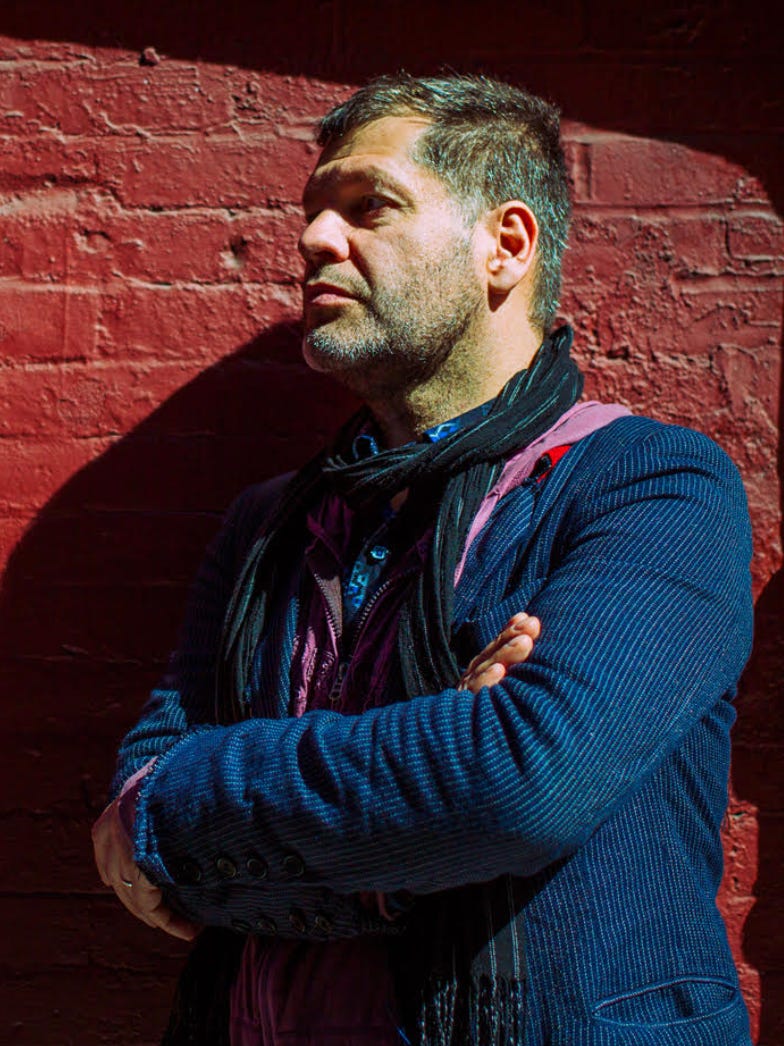
Lucian Ban, photo by Elmer Lemes
1. Lucian, you’ve performed at Earshot Jazz Festival in Seattle at least twice before. What keeps bringing you back to Seattle, and what makes the festival special?
Actually, I’ve been coming to Seattle quite a few times. The first time was in 2016 with Mat Maneri for our Transylvanian Concert, and then in 2017 I came back with Elevation for Songs From Afar at the Seattle Art Museum, with Billy Hart, Mat, Abraham Burton, Brad Jones and Gavril Țărmure. I was also there in 2023 with Mat’s ASH Quartet.
What I like about Earshot is that they have always been open to different sides of what I do. There is also a very serious listening audience in Seattle. ARCS has been an important partner for me over the years as well. So it feels less like coming to a festival and more like returning to a place where some of these projects have already had a life.
2. Looking at your career, there’s this repeated engagement with Enescu, and now Bartók. What draws you to these major 20th-century composers?
It’s not really because they are major 20th-century composers. What draws me to them is the way their music connects with improvisation and with the folk traditions behind it.
I actually rediscovered Enescu after I came to New York. I was surprised by how much freedom there was inside his music. His writing for the violin is extremely detailed, but that detail comes partly from having internalized the way Romanian folk violinists played—with all their inflections, ornaments and rhythmic freedom. So even when the music is completely written out, there is something very alive and improvisatory inside it.
With Bartók, the connection is even more personal. I grew up in the region where he collected these songs, and only later did I realize the extraordinary depth of what he had documented. He collected thousands of songs, but what fascinates me is not simply the historical importance of the collection. It’s that these songs still have an incredible life in them. They can be transformed, improvised with and taken somewhere completely different without losing their identity.
I don’t see folk music as something primitive or secondary. There is an enormous musical intelligence in it, and both Enescu and Bartók understood that.
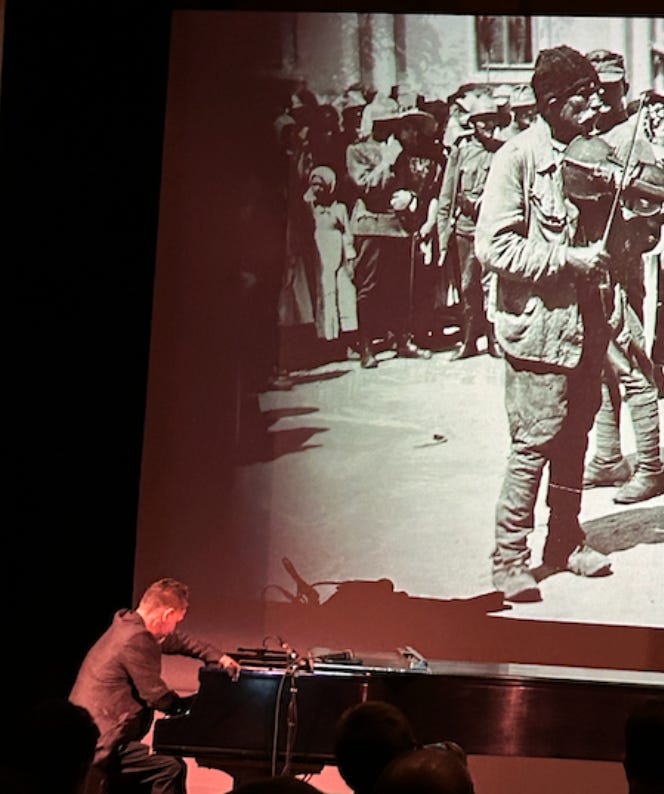
3. This project expands jazz into multimedia, with archival photographs, historical recordings and Bartók’s wax-cylinder recordings. Why was it important to go beyond the music itself?
The multimedia piece grew out of a commission and presentation by National Sawdust and the World Music Institute, which premiered in February 2025. As we developed it, we worked closely with the Budapest Bartók Archives and obtained some extraordinary material: rare footage of Transylvanian villagers dancing from the early 20th century, photographs Bartók took himself on his field trips, facsimiles of his transcriptions, and the audio from the original Edison wax-cylinder recordings.
For us, these aren’t simply historical documents illustrating the music. Bartók himself understood that something is lost when living music is reduced to notation. He wrote about the “pulsing life” of peasant music that could not fully be captured on the page. So, it became important to bring some of that original life back into the performance—the voices, the dancers, Bartók’s own gaze and his attempts to capture what he was hearing.
We created a video narrative from this material that Mat and I interact with live. In a way, you have three different moments meeting in the same performance: the people Bartók recorded more than a hundred years ago, Bartók himself, and the two of us responding to that material today. The archival material becomes part of the improvisation, another voice in the dialogue. And every night that dialogue is different.
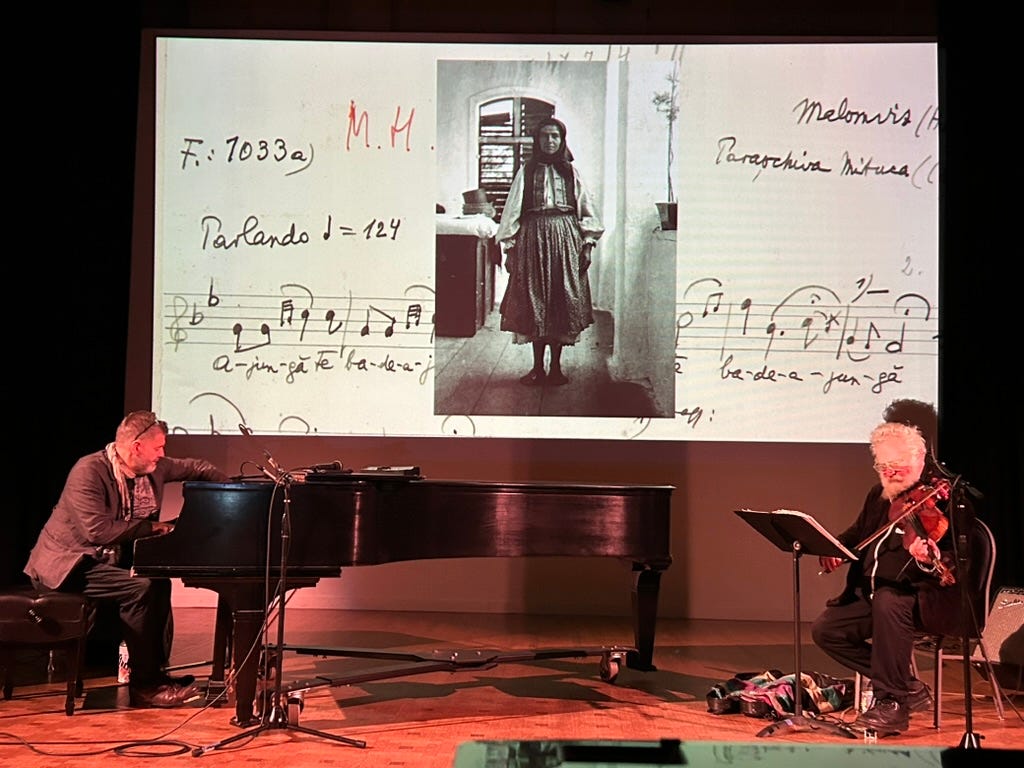
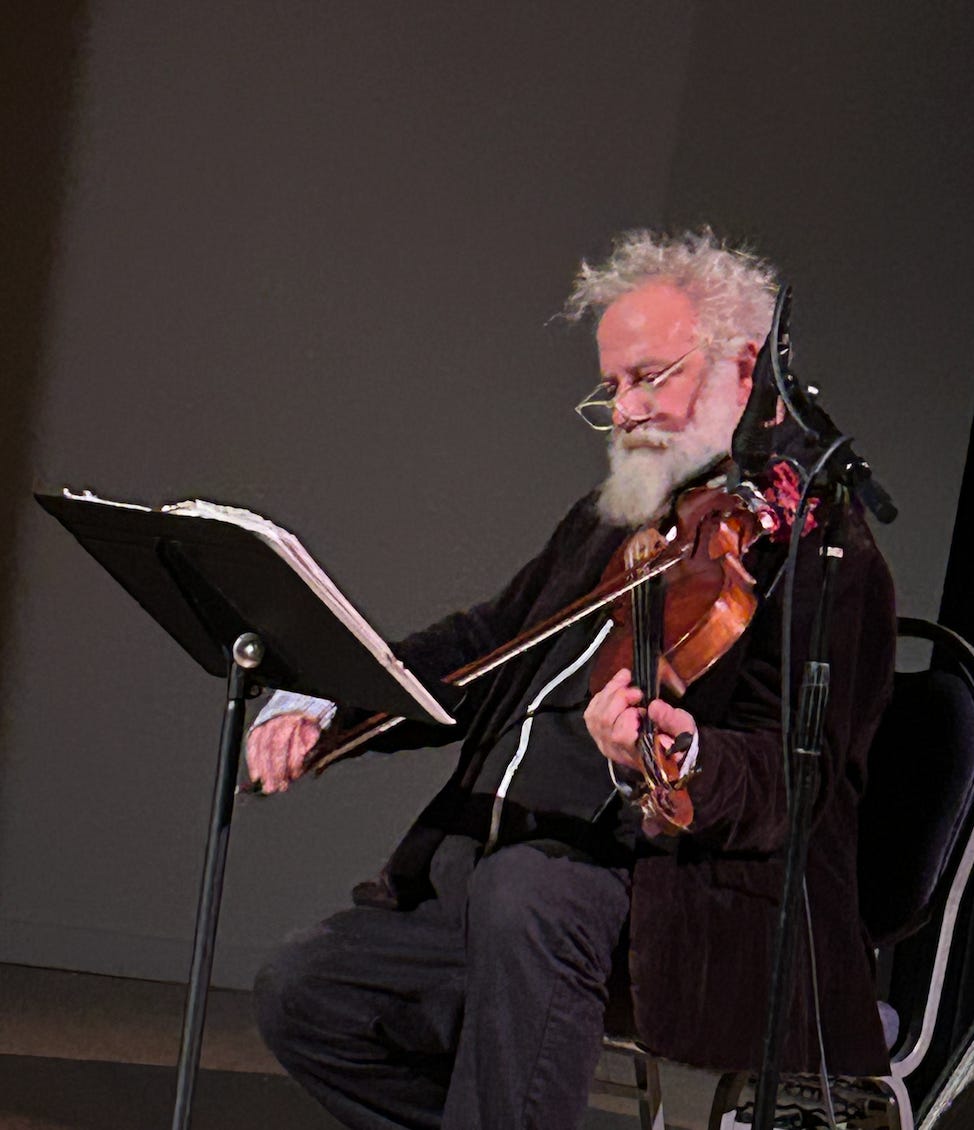
4. Bartók and Enescu are strongly associated with the violin and piano, but you and Mat use piano and viola. Why the viola? Does it open possibilities that the violin doesn’t?
For me, the viola has a lower, darker sound that is closer to the human voice—or sometimes to a horn—than the violin. And Mat has created one of the most identifiable sounds in modern jazz on a string instrument. All About Jazz once wrote that “Mat Maneri has changed the way the jazz world listens to the violin & viola,” and The Wall Street Journal called him a “jazz viola virtuoso.”
When we first played together, that sound immediately made sense to me. Mat also brings microtonality and techniques from many different musical traditions. So I never thought of the viola as a substitute for the violin. It became part of our own language.
5. You and Mat have been playing together for many years. Did the friendship come because of the music, or did the music become what it is because of the friendship?
I think we became friends because of the music, and then the friendship became part of the music.
We’ve been playing together for seventeen years now. We come from very different places, but we have a similar curiosity and a similar way of listening. After so many years and so many tours, there is a kind of shorthand between us. We can react to each other very quickly without having to explain much.
And I’ve learned a lot about freedom from Mat.
6. Jazz is fundamentally social and collaborative. What do you think makes that kind of dialogue and community possible?
For me, improvisation is fundamentally about listening. We humans improvise in order to survive. And in our music, in jazz, you are making decisions in real time, but those decisions depend on what the other musicians are doing. You have to be willing to give something up, to follow somebody else, or to change direction completely.
I learned that from many people—Alex Harding, Abraham Burton, John Hébert, Billy Hart, Nasheet Waits, Gerald Cleaver, Mat and others. A lot of what we call the jazz tradition is really transmitted from one musician to another. You learn by being around people, playing with them and listening.
7. You founded Elevation and have sustained the ensemble for many years. What has allowed you to build such a lasting ensemble in the homeland of jazz?
I just kept playing with the people I wanted to play with, and maybe even more importantly, musicians that are better than me.
Elevation started in 2006 with Abraham Burton, and John Hébert and Eric McPherson became the core of the quartet. We spent years playing clubs, festivals and touring before people really started paying attention. You cannot really rush that process.
For me, that’s how a band develops a language. You play together for a long time, you learn each other’s instincts, and eventually the music becomes something that couldn’t exist with four different people.
8. How would you describe Elevation’s music? What distinguishes your approach from the traditions and styles that have influenced you?
Elevation is a what is called a classic jazz quartet: saxophone, piano, double bass and drums. I don’t feel the need to put another category on it.
The music comes out of a long history—bebop, post-bop, blues, free jazz, the piano tradition—but all of those things are inside us rather than something we consciously try to reproduce. There is also some Romanian DNA in my writing, but I’m not trying to make Romanian music with a jazz band.
What is important to me is that the musicians retain their own voices. Composition and improvisation are not opposites. The music has a structure, a history and a vocabulary, but it has to remain alive. You know where you come from, but you don’t know exactly where you’re going to arrive.
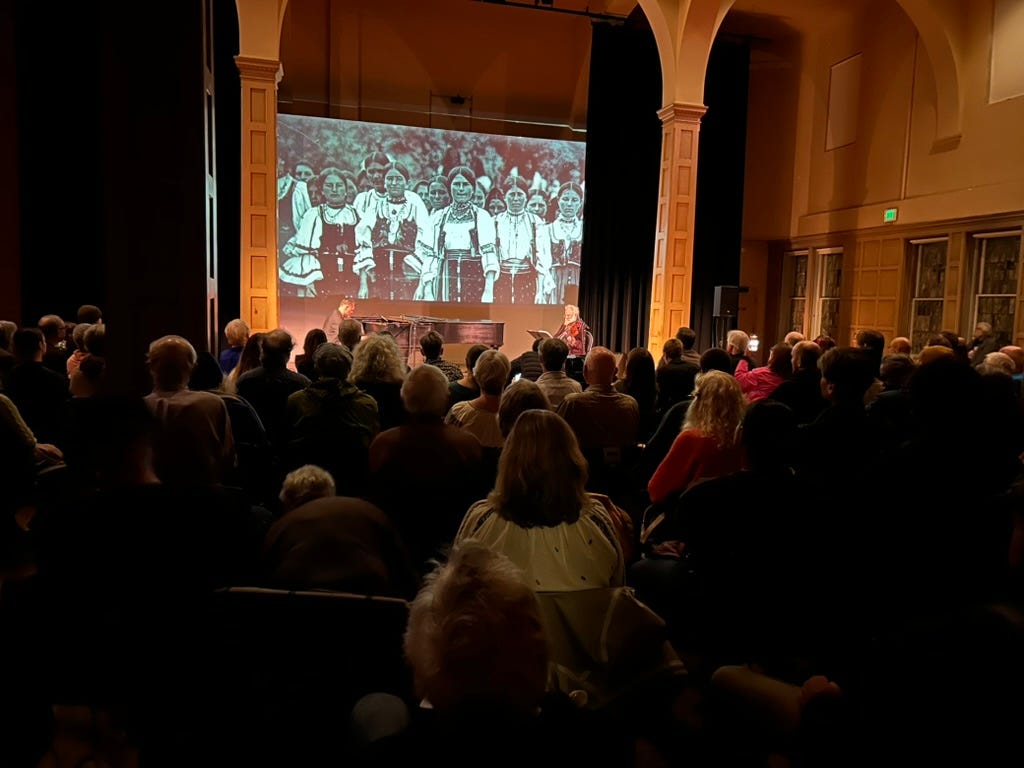
The Seattle performance of Transylvanian Dance on October 9 at the Chapel Performance Space at the Good Shepherd Center, presented by the American Romanian Cultural Society (ARCS) in partnership with the Earshot Jazz Festival, has opened a timely conversation about the power of the arts to cross borders. The project itself transcends boundaries between folk tradition and contemporary improvisation, Eastern European and global musical traditions, archival history and the present, composition and spontaneous creation. In the same vein, the theme of the 13th edition of the Romanian Film Festival is Beyond Borders. The films selected for this year’s festival likewise transform borders into sites of encounter, exchange, and discovery.