

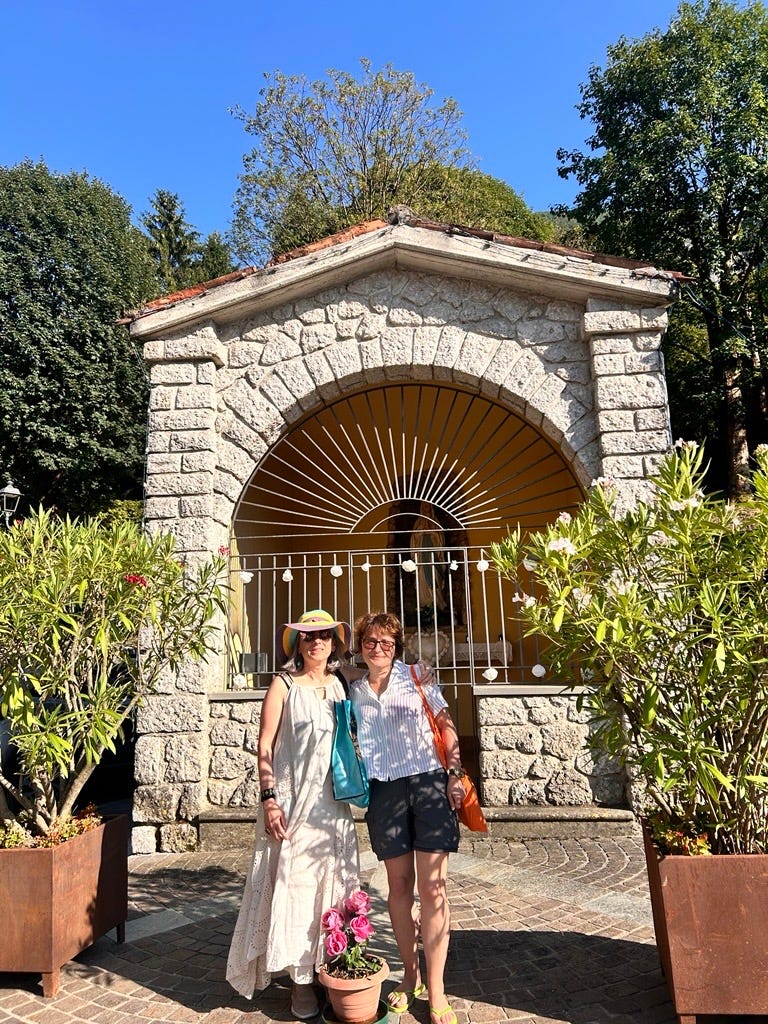
Recently, I met up with my sister in Lombardy. The first photograph we took together- we had, of course, to send our mother proof that we had found each other - happened to be in front of a roadside shrine.
We expected her usual response, something along the lines of, “I’m happy you found each other!”
Instead, the message that came almost immediately had nothing to do with us.
Mom looked at the shrine.
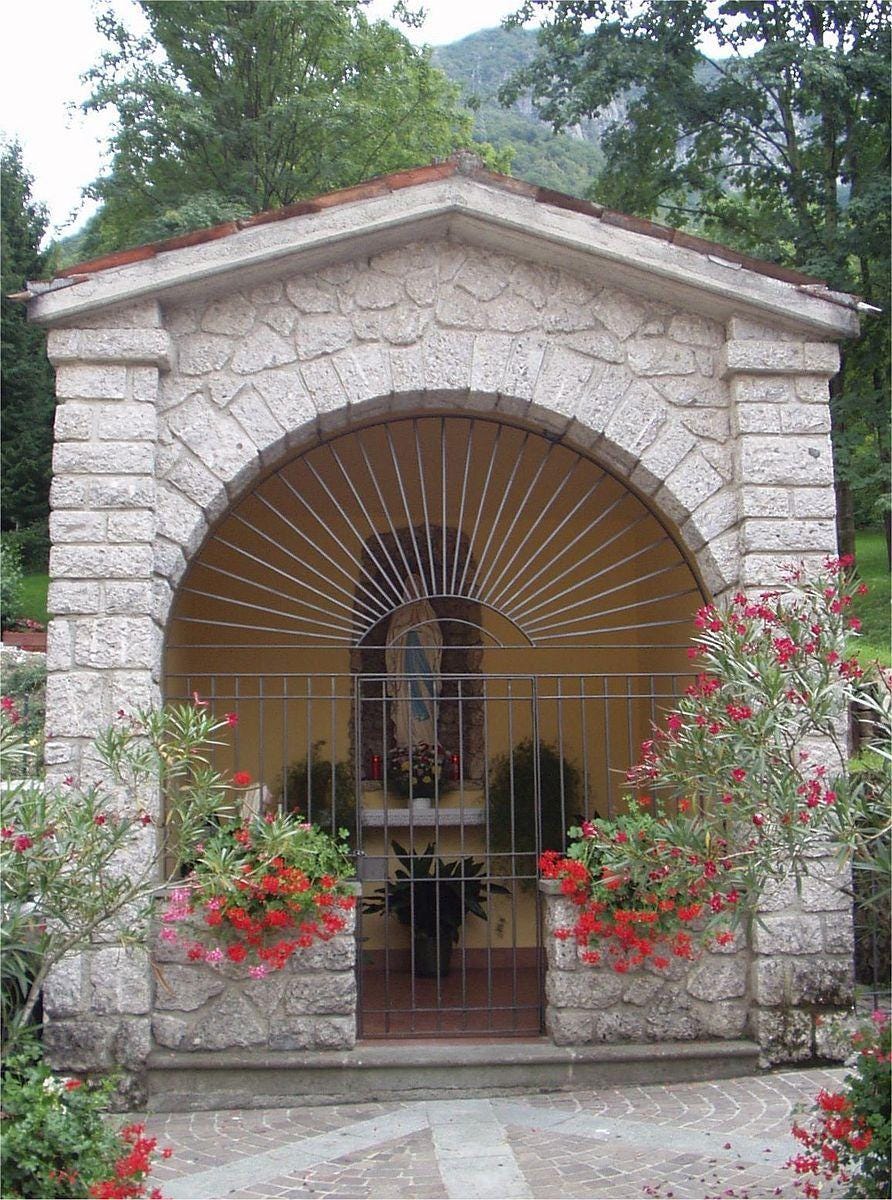
“It looks like the roadside shrines back home.”
For my mother, “home” meant the villages of Muntenia, her parents’ house in Vulcana Pandele, and her aunt’s house in Brănești.
I asked her what she remembered about those shrines.
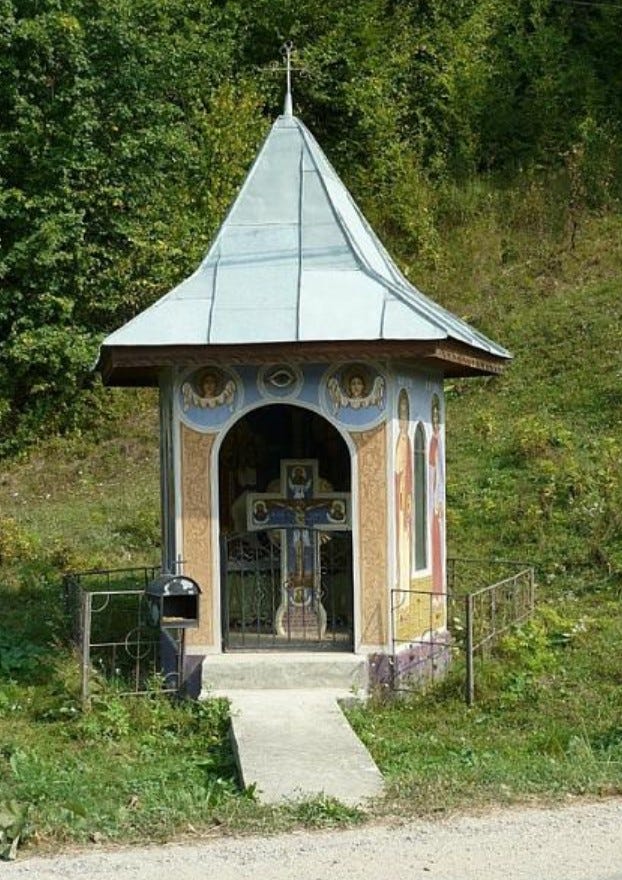
They were built by well-to-do people. Sometimes by one family, sometimes several villagers would join together and build one in memory of their parents and ancestors. Or to ask for the Virgin Mary’s goodwill and protection. Or to show their gratitude for what life had given them, or what God, in His great mercy, had given them.
Some of the shrines, however, also carried memories of tragedy. During the strong summer storms, it happened more than once that people who took shelter from the rain inside the shrines were struck by lightning. The community saw these events as punishments from God for things the people who were struck had done, or even for things their ancestors had done.
And how did people know what sin the person was being punished for?
Well, that’s when the discussions about the family’s history would begin. People talked during the three days and three nights of the wake. The discussions usually ended with the funeral.
But what do you remember about these shrines?
Mostly I remember the strong summer storms. Sometimes they caught me on the road between Vulcana and Brănești, between our house and my aunt’s house.
This road comes up again and again in my mother’s stories, for all sorts of strange reasons.
And why did you make that trip so often?
Well, you see, my mother would wake up in the morning and decide she was going to make soap. It annoyed me my entire childhood that she couldn’t prepare for it the day before. She was always missing something, and I had to run off and get it. Usually she was missing salt. Salt was very important. If you didn’t add it at the right moment, the soap would separate.
And then there was the lovage.
We had an enormous lovage plant by the gate. But my mother would pick the whole thing at once instead of leaving some for next time. It would dry up, and once again we had no lovage. So then it was, “Go get some lovage from Auntie Fina.” “Go get some parsley from Auntie Fina.”
And the storms would catch you on these trips?
Yes. Most of the time I would sit down by the side of the road and wait for the storm to calm down a little, so I wouldn’t be a moving target for the lightning. It would never even have crossed my mind to take shelter inside a shrine. The old people said you shouldn’t shelter in a shrine during a storm; tradition said it was a sin. And by then I had also learned some physics, around sixth grade. The old people’s advice and the laws of nature agreed on this one: you don’t hide in a shrine when there’s lightning.
But according to tradition, were the people who took shelter there struck by lightning only if they had sinned?
There is no such thing as a person without sin.
For example, you said you were going to pick parsley from the garden, but instead you went off to play. That’s a sin.
In the world of her childhood, it seems the distance between sin, parsley, and divine punishment could be surprisingly short.
Were you afraid of sin when you were little?
I was afraid of lightning and thunder.
And just like that, from a photograph in a beautiful place, a memory for the future and a thought sent home to our mother, we found ourselves on the road between Brănești and Vulcana Pandele, among roadside shrines, summer storms, stories about the sins of our ancestors, soap that would separate if you didn’t add the salt at the right moment, and the eternal shortage of lovage in a household that, paradoxically, had an enormous lovage plant by the gate.
We sent home a photograph from Lombardy.
Mom sent us back a piece of the Muntenia of her childhood.
*************************************************************************
Romanian, original
Din Lombradia la Brănești
De curând m-am întâlnit în Lombardia cu sora mea. Prima fotografie împreună - trebuia, bineînțeles, să-i trimitem mamei dovada că ne-am găsit - s-a întâmplat să fie în fața unei troițe.
Ne așteptam la răspunsul ei obișnuit, ceva de genul „Mă bucur că v-ați întâlnit și ce frumos vă stă împreună!”
În schimb, mesajul care a venit aproape imediat nu avea nimic de-a face cu noi.
Mama s-a uitat la troita.
“Seamănă foarte mult cu troițele de acasă.”
Pentru mama, „acasă” însemna satele din Muntenia, casa părinților in Vulcana Pandele și casa mătușii din Branesti.
Am întrebat-o ce își amintește despre troițele acelea.
Erau făcute de oameni înstăriți. Uneori de câte o familie, alteori se asociau mai mulți săteni și ridicau o troiță în memoria moșilor și strămoșilor. Sau ca să atragă bunăvoința și ocrotirea Maicii Domnului. Sau ca să-și arate recunoștința pentru ceea ce le oferise viața ori Dumnezeu, în marea Lui milostenie.
Unele troițe păstrau însă și amintirea unor tragedii.
În timpul furtunilor puternice de vară s-a întâmplat de mai multe ori ca oameni care se adăposteau de ploaie în troițe să fie trăsniți. Comunitatea considera asemenea întâmplări pedepse ale lui Dumnezeu pentru fapte săvârșite de cei trăsniți sau chiar pentru fapte săvârșite de strămoșii lor.
Și de unde se știa pentru ce păcat fusese pedepsit omul?
Păi începeau discuțiile despre istoria familiei lui. Se vorbea în cele trei zile și trei nopți de priveghi. Discuțiile se încheiau, de obicei, odată cu înmormântarea.
Dar tu ce-ți amintești despre troițele astea?
Îmi amintesc mai ales furtunile puternice de vară. Mă prindeau uneori pe drumul dintre Vulcana si Branesti, între casa noastră și casa mătușii mele.
Drumul acesta apare de mai multe ori în poveștile mamei, pornind de la cauze care mai de care mai ciudate.
Si de ce făceai atât de des drumul ăsta?
Pai uite, mama se trezea dimineața și se hotăra că face săpun. M-a enervat toată copilăria că nu se pregătea și ea cu o zi înainte. Întotdeauna îi lipsea ceva și eu trebuia să plec fuga-fuga să aduc. De obicei îi lipsea sarea. Sarea era foarte importantă. Dacă nu o puneai la momentul potrivit, se tăia săpunul.
Mai era și leușteanul.
Aveam la poartă o tufă de leuștean cât toate zilele. Numai că mama îl culegea pe tot odată, în loc să mai lase și pentru data viitoare. Se usca și noi iar nu aveam leuștean. Și atunci: „Du-te după leuștean la tanti Fina.” „Du-te după pătrunjel la tanti Fina.”
Și te prindeau furtunile pe drumurile astea?
”Da. De cele mai multe ori ma asezam pe marginea drumului si asteptam sa se mai potoleasca furtuna, să nu fiu o țintă în mers pentru fulgere. Nici prin minte nu mi-ar fi trecut să mă adăpostesc într-o troiță. Bătrânii spuneau că nu trebuie să te adăpostești într-o troiță pe vreme de furtună, tradiția spunea că ar fi păcat. Si mai si învățasem fizică, prin clasa a șasea. Motivația din spatele sfaturilor bătrânilor si legile naturii erau de acord - nu te ascunzi in troita cind fulgera.”
Dar ce spunea traditia, oamenii care se adăposteau acolo erau trăsniți numai dacă aveau păcate?
“Nu există om fără păcat.”
“De examplu, ai mințit că te-ai dus să culegi pătrunjel din grădină, dar tu, de fapt, te-ai dus și te-ai jucat. E pacat”
În lumea copilăriei ei, se pare că distanța dintre păcat, pătrunjel și pedeapsa divină putea fi surprinzător de mică.
Ție îți era frică de păcat când erai mică?
“Îmi era frică de trăsnet și de tunet.”
Si uite asa, dintr-o fotografie intr-un loc frumos, o amintire pentru viitor si un gand pentru mama, am ajuns la drumul dintre Brănești și Vulcana Pandele, troițe, furtuni de vară, poveștile despre păcatele strămoșilor, săpunul care se tăia dacă nu puneai sarea la timp și eterna lipsă de leuștean dintr-o gospodărie care avea, paradoxal, o tufă cât toate zilele.
Noi am trimis acasă o fotografie din Lombardia.
Mama ne-a trimis înapoi o bucată din Muntenia copilăriei ei.