
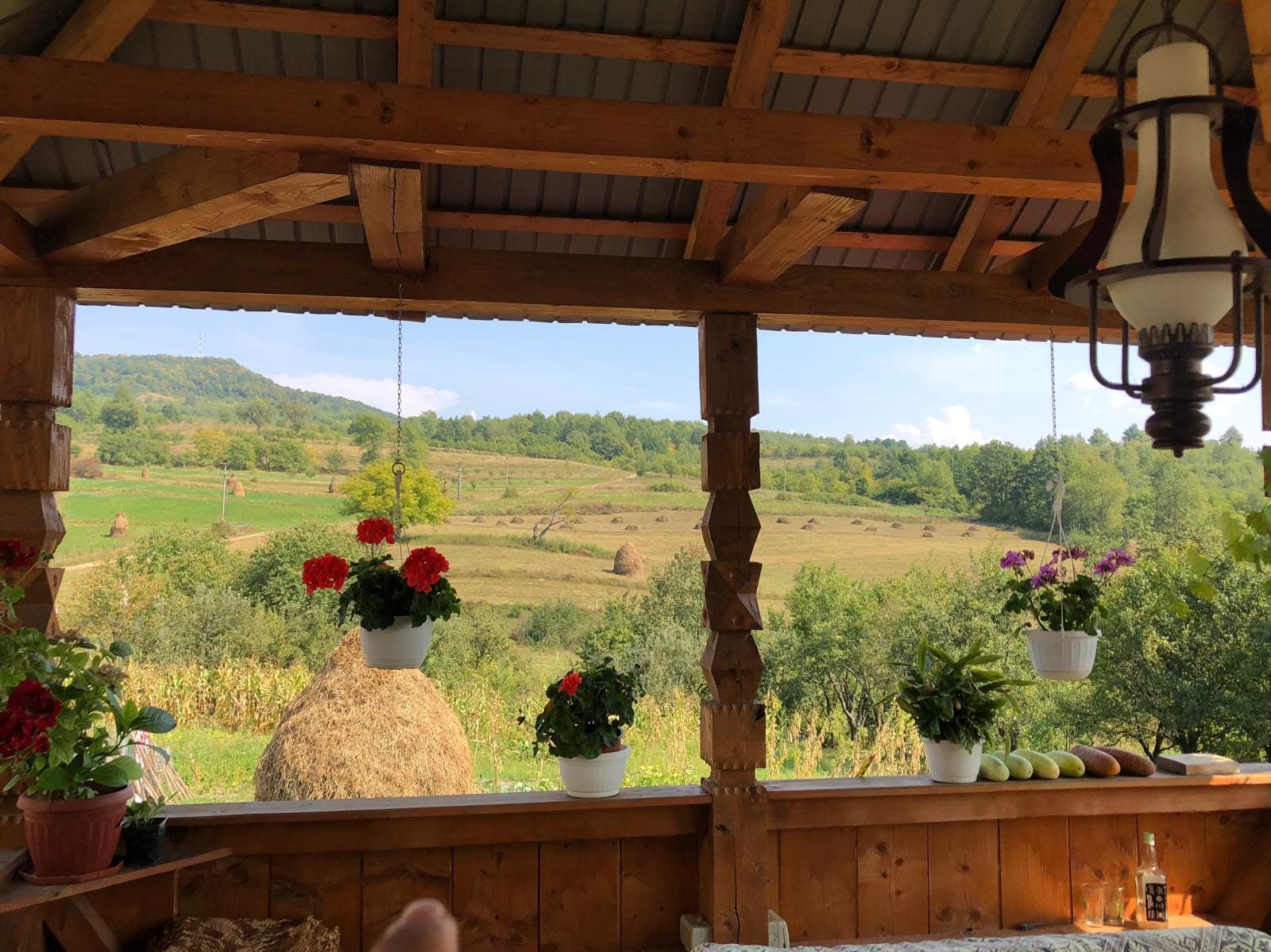
Clic… o poză în Maramureșul copilăriei mele.
Haida, hai la Maramu’, no hai amu’…
Așa cum spun poeții români, am simțit și eu că eternitatea s-a născut la țară, într-o seară liniștită de vară, pe unul din dealurile micuțului sat Drăghia, din județul Maramureș. Eram adolescentă și îmi însoțisem bunica la datul oilor în strungă. Priveam apusul înroșit și simțeam pe obraji prospețimea aerului, în timp ce glasul sătenilor și talăngile oilor mă țineau oarecum ancorată în realitate. Bunicii mei, lelea Elvira și badea Victor a lui Ariton, erau mulțumiți când nepoata de la Cluj participa la astfel de activități. Îmi plăcea mult să calc „fârcituri” ca să pot coborî pe „furcoi” la sfârșit, și în general să ajut la întorsul și strânsul fânului înmiresmat. Dar cel mai mult îmi plăcea să merg cu „ojina” la bunicu’ la coasă, căci așa, toată ziua, străbăteam fără griji dealurile Drăghiei împreună cu verișoarele mele.
Într-adevăr, păstrez în suflet amintiri dragi despre locuri și oameni din Drăghia. Mă văd aievea pe „drumul țării”, adică drumul asfaltat ce trecea prin sat, legându-l de alte sate, unde ne plimbam duminica cu fetele și verișoarele de seama mea; pe „pietrișul” de la intrarea în sat, unde iarna ne dădeam cu săniuța; pe ulițele întortocheate ale satului; și la „căminul cultural”, unde jucam la nunți și baluri. Acordurile ceterii îmi răsună și acum în inimă, peste mări și țări unde nu visam să ajung vreodată, darmite să joc ca în Maramu’... Colindele de Crăciun pe care le cânt și acum le știu din Drăghia, de pe vremea când umblam după colaci din casă în casă, unde întâlneam oameni blânzi și primitori. Desigur, căsuța bunicilor, unde număram puii aurii, poamele și ciupercile înșirate pe ață și lemnele de foc, este un refugiu în sufletul meu.
Biserica, în curtea căreia este înmormântat străbunicul meu și pentru care bunica a făcut multe șterguri, și chiar și biserica veche de lemn sunt folosite și îngrijite de generațiile satului și e uimitor să le văd astăzi pe internet.
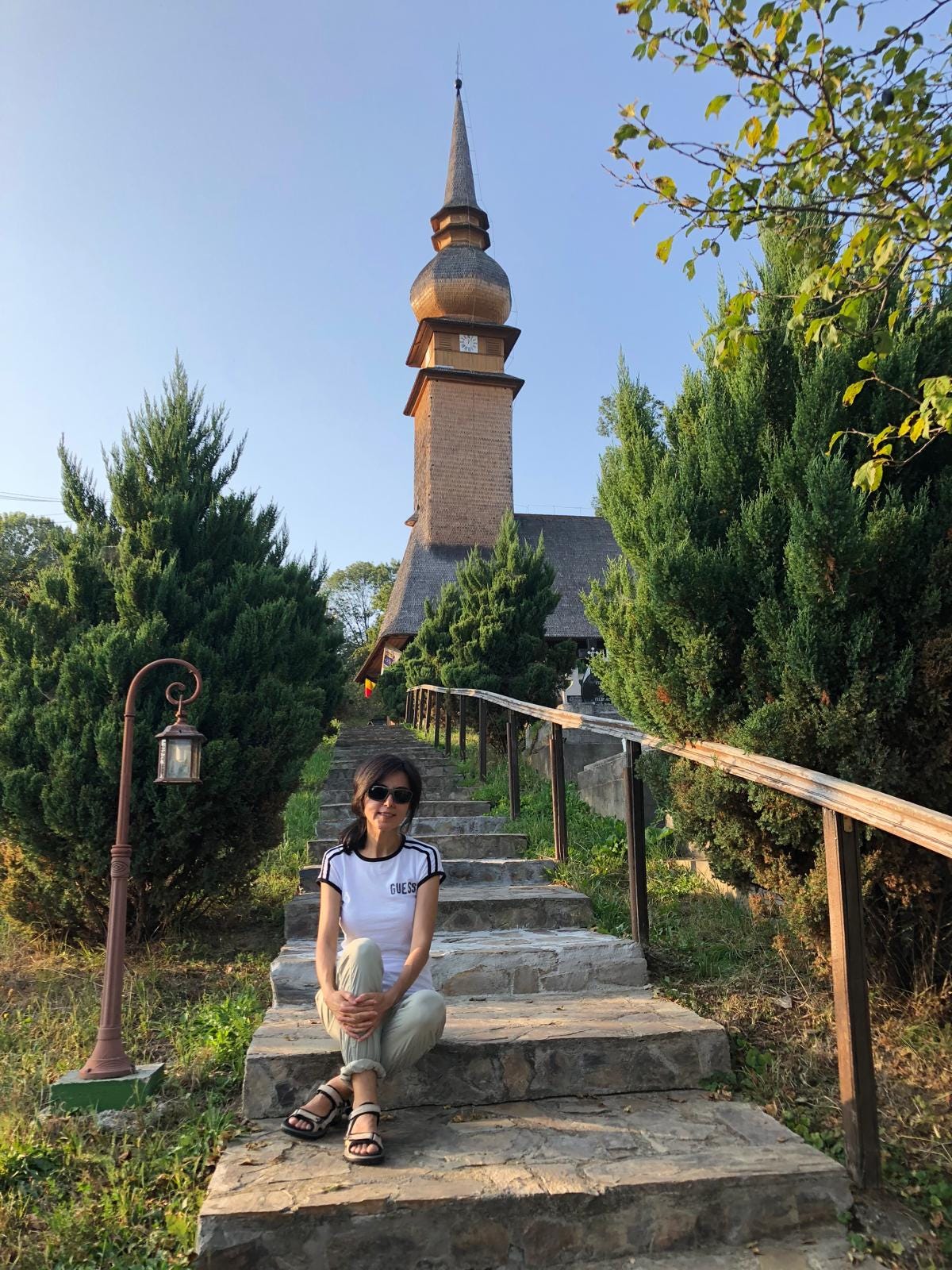
Mă simt binecuvântată și privilegiată că am avut bunici țărani, că am copilărit în Maramureș, că am cunoscut un mod de viață ce dispare cu încetul – viața în ritmul naturii, cu grijă pentru oameni și suflet.
English version
Click… and a picture from the Maramureș of my childhood
Come to Maramu’, come now.
As Romanian poets say, I too felt that eternity was born in the countryside, on a quiet summer evening, on one of the hills of the small village of Drăghia, in Maramureș County. I was a teenager and I had accompanied my grandmother to bring the sheep into the pen. I would watch the red sunset and feel the freshness of the air on my cheeks while the voices of the villagers and the bleating of the sheep kept me somewhat anchored in reality. My grandparents, lelea Elvira and badea Victor, were pleased when their granddaughter from Cluj participated in such activities.
I really liked to help build the huge haystacks so that I could slide down on the “furcoi” at the end, and, in general, to play with the fragrant hay. But most of all, I liked to bring food to my grandfather in the fields, because that way I would cross the hills of Drăghia without a worry all day long with my cousins.
Indeed, I keep fond memories of places and people from Maramureș in my heart. I can still see myself on the “country road,” that is, the paved road that passed through the village, connecting it to other villages, where we would walk on Sundays with my cousins and other girls; at the entrance to the village, where we would go sledding in winter; along the winding paths of the village; and at the cultural center, where we would folk dance at weddings and parties village dances.
The sounds of the violin still resonate in my heart, across oceans and countries that I never dreamed of ever reaching, let alone folk dancing like in Maramu’... The Christmas carols that I still sing I learned in Drăghia, when we would go caroling from house to house, where we would meet kind and welcoming people.
Of course, my grandparents’ cottage, where we would count the golden chicks, the apples and mushrooms strung on a thread, and the firewood, is a refuge in my soul. The church, in the courtyard of which my great-grandfather is buried, and for which my grandmother made many embroideries, and even the old wooden church, are used and cared for by generations of the village, and it is amazing to see them on the internet.
I feel blessed and privileged to have had peasant grandparents, to have grown up in Maramureș, and to have known a way of life that is slowly disappearing – life in the rhythm of nature, with care for people and the soul.