Liliana Sambotin’s art is brought to life by fragments of colored glass and the light that catches them. Born in Romania and now based in the Pacific Northwest, she came to art by way of computer science and photography. A mixed media workshop in 2020 led her to experiment with colored glass, and what began there grew into the work she now shows under the name GlassArtography.
In this conversation for ARCS Journal, Sanda Berar speaks with Liliana about how photography changed the way she sees, what glass taught her about letting go of control, and how she came to see herself as an artist.
Before the glass
Sanda: Before the camera and the glass, what place did making art have in your life? Is there a memory from growing up in Romania that comes to mind?
Liliana: Growing up in Romania, I didn’t have many opportunities to explore art in a formal sense. I always loved math and science, and they were my strongest subjects in school, but hands-on projects were something I welcomed too, a kind of relaxing counterpart to all that logical thinking. My mother taught me to knit, crochet, and sew, and I went deep into it, eventually attempting to make my own pants and a jacket.
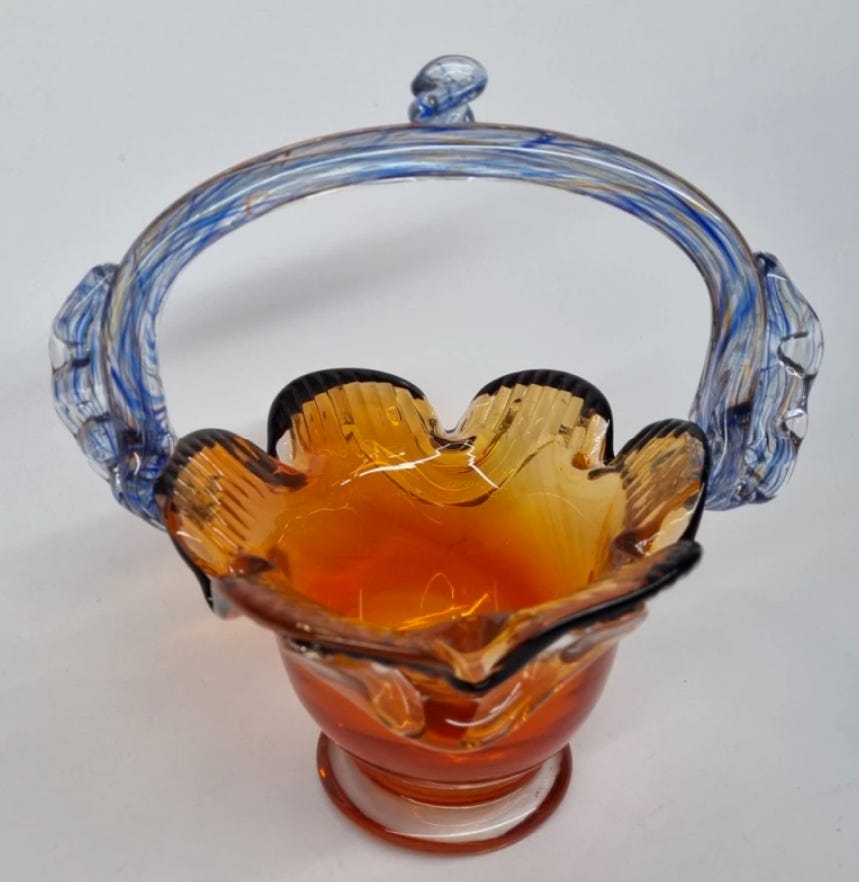
I also remember being pulled toward color, especially color in glass. It was a gray, difficult era, and there wasn’t much brightness in people’s everyday lives. But many homes had bibelouri (small decorative glass trinkets) and I was attracted to touch and hold them. Looking back, I think that fascination with light catching color was already there, long before I ever imagined working with glass myself.
Sanda: You went on to build a career in computer science. What drew you to that field and what did you enjoy about it? Did any of those ways of thinking carry into your art?
Liliana: As I mentioned, math and problem-solving were always my strongest assets, even as a child. In Romania at that time, getting into a university program was essentially a one-shot try: you sat an exam, and you were either in or you weren’t, so the choice mattered. When I applied for Computer Science, I had never actually seen a computer. I just found the idea intriguing. I also knew the program itself would be demanding, and that appealed to me… I’ve always liked being challenged.
I went on to build a career as a software engineer, and what I enjoyed most was the problem-solving itself: untangling something that didn’t work, and figuring out how to make it work. I also got to meet incredibly smart people along the way, and I liked exploring different sides of the industry: development, testing, project management. More than anything, that career taught me that hard work comes with its own satisfaction.
That mindset carried straight into my art. I don’t give up on a piece until the problem is solved… and how many times have I repainted a canvas, over and over, until it finally looked right? It’s the same persistence, just applied to a different kind of problem.
Learning to see differently
Sanda: You’ve written that getting a camera made you see the world from new perspectives. What did you begin noticing through photography that you had previously walked past?
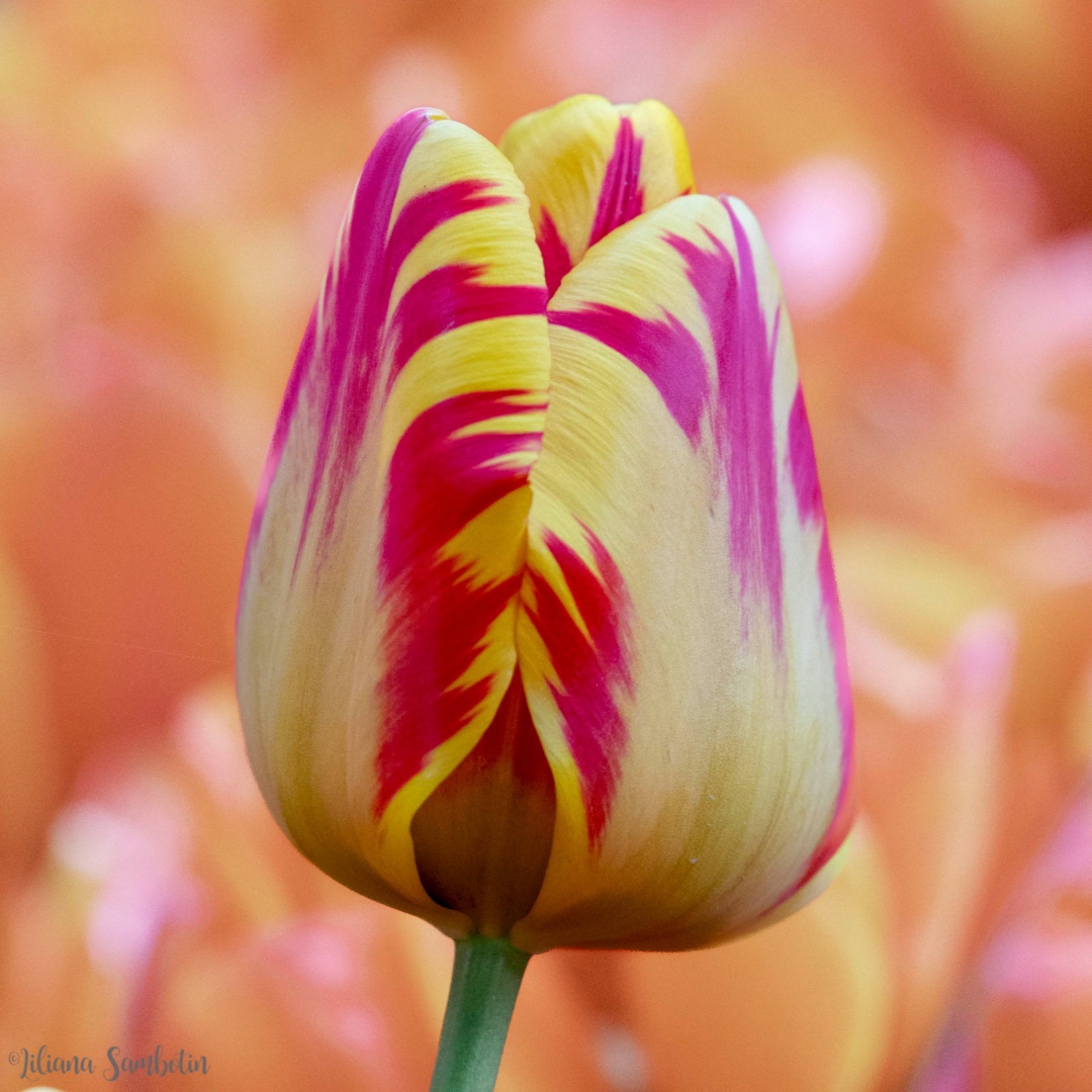
Liliana: Photography is really about light. Once I started, I began looking at light differently, noticing highlights, shadows, the way light shapes something rather than just falling on it. It also pushed me to think outside the box. Every year, for example, I go to the Skagit Valley Tulip Festival, and I make a point of forcing myself to find a completely different way to photograph a tulip than the year before. Getting into close-ups of objects, flowers, birds etc. felt like discovering a whole new world hiding inside the one I already knew.
Sanda: In 2020, a workshop brought you back to colored glass. Can you take us into that moment? What did you make, and what made you want to keep going?
Liliana: 2020 was hard for everyone, and for me, the pandemic made the distance between my two worlds (the US and Romania) feel bigger than it ever had before. I was looking for new things to try at home, ways to hold onto some sense of sanity. It was also a time when I was deepening my photography: I’d joined a social media group with weekly projects and feedback from other photographers.
Then I found a workshop where you paint a surface, add crushed glass into it, and finish by pouring resin on top. The resin is what brings it all to life: it pulls out the colors and makes the glass truly shine.
Around that same time, my father back in Romania got sick. Keeping my hands busy became a way to cope. I kept making pieces, some with glass, some without. I picked up a few painting books and taught myself more along the way. Art became a kind of therapy.
Becoming an artist
Sanda: Once you began combining painting and glass, how did you find your own way of working? What did those first pieces teach you?
Liliana: I experimented with different subjects at first, but flowers were what stuck with me. Nature has always been my biggest inspiration. Along the way, I became something of a “glass collector.” One of my favorite sources is glassblowers’ broken pieces: they bring incredible color and curve into the work. Because of that curve, cutting the glass isn’t an exact science. It becomes more like a conversation: what I intend to do and what I actually get after cutting don’t always match, and I have to let that redefine my first idea. That curved glass taught me to let go of control a little and to listen to the material instead of forcing my original plan onto it.
Sanda: You’ve spent years helping young people through Destination Imagination program. Has watching them experiment and take creative risks changed the way you approach your own work?
Liliana: Destination Imagination (DI) is a program where teams of kids tackle open-ended creative challenges on their won, with adults guiding but never giving answers, and then present their original solutions at tournaments. I was involved with the program for twelve years as a volunteer team manager, then as a Regional Tournament Director for two more years. Supporting creativity was at the heart of that work, and I learned an enormous amount from it. I witnessed firsthand what open minds can create, what freedom can build, and how bringing ideas together can result in something truly extraordinary.
At the end of every season, I was impressed by the team’s final project. The path to solving DI’s challenges was never easy or straightforward. But with an open mind, creativity, critical thinking, and no fear of trying until you find the right solution, the results were spectacular every time. That was a strong inspiration for me: a reminder to stay open, keep experimenting, and trust the process, even in my own art.
Sanda: Was becoming an artist a gradual change in how you saw yourself, or was there a moment when you first said, “I’m an artist”?
Liliana: It was a gradual move for me. I started out timidly, showing up at local community art walks. I found a lot of support along the way, and I was always seeking out mentors and guidance from people already in the community. As I advanced in this new artistic life (going to more professional shows, making friends who were artists themselves) I started to feel like I belonged to a community of artists.
A big turning point for me was being invited to join a commercial gallery, along with invitations to different shows. That’s when I realized I was being “noticed”. And that’s when it really started to feel real.
Sanda: Is there a piece that feels especially important to you? Could you tell us its story - from the first idea through the decisions you made as you worked on it?
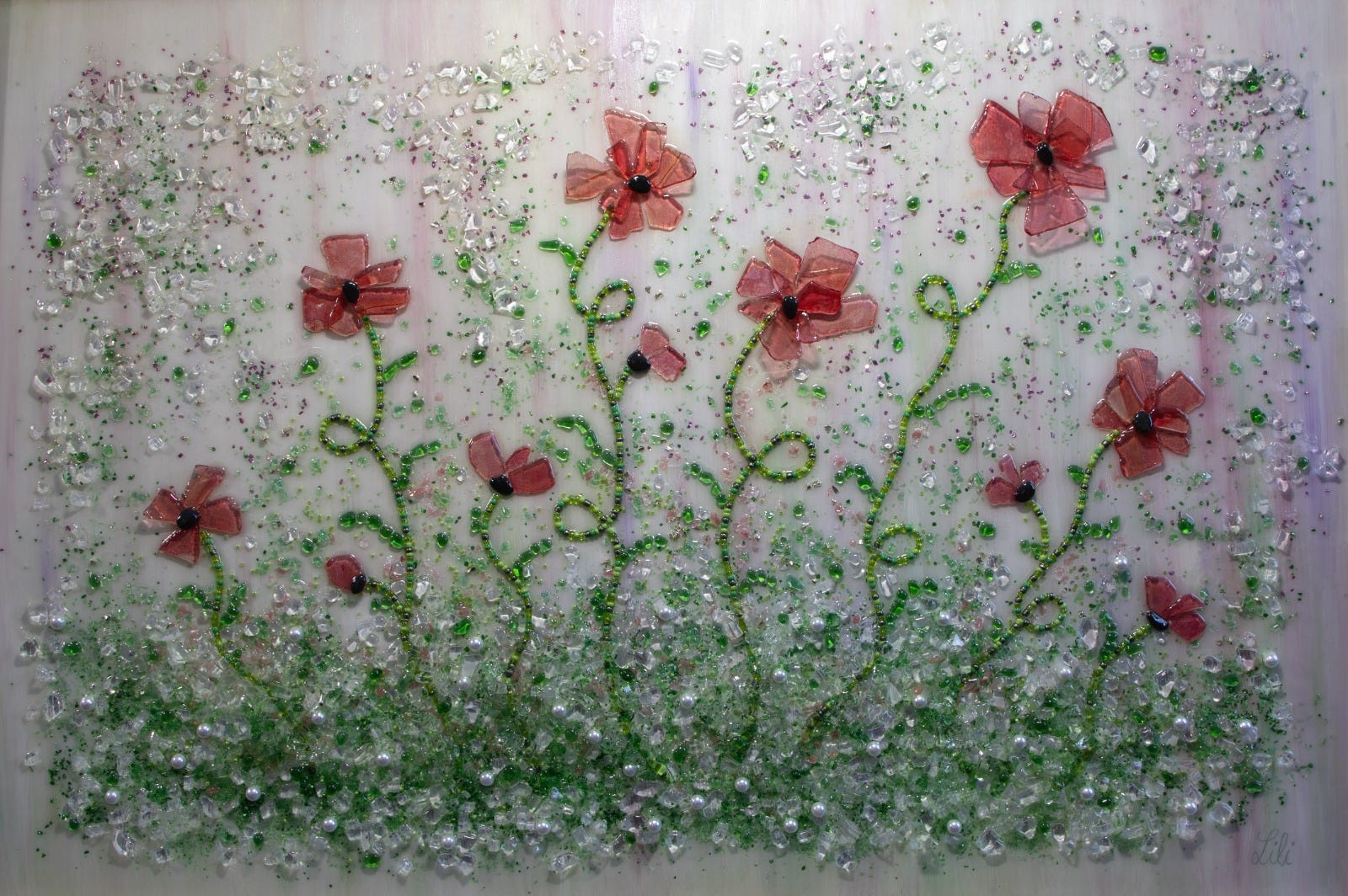
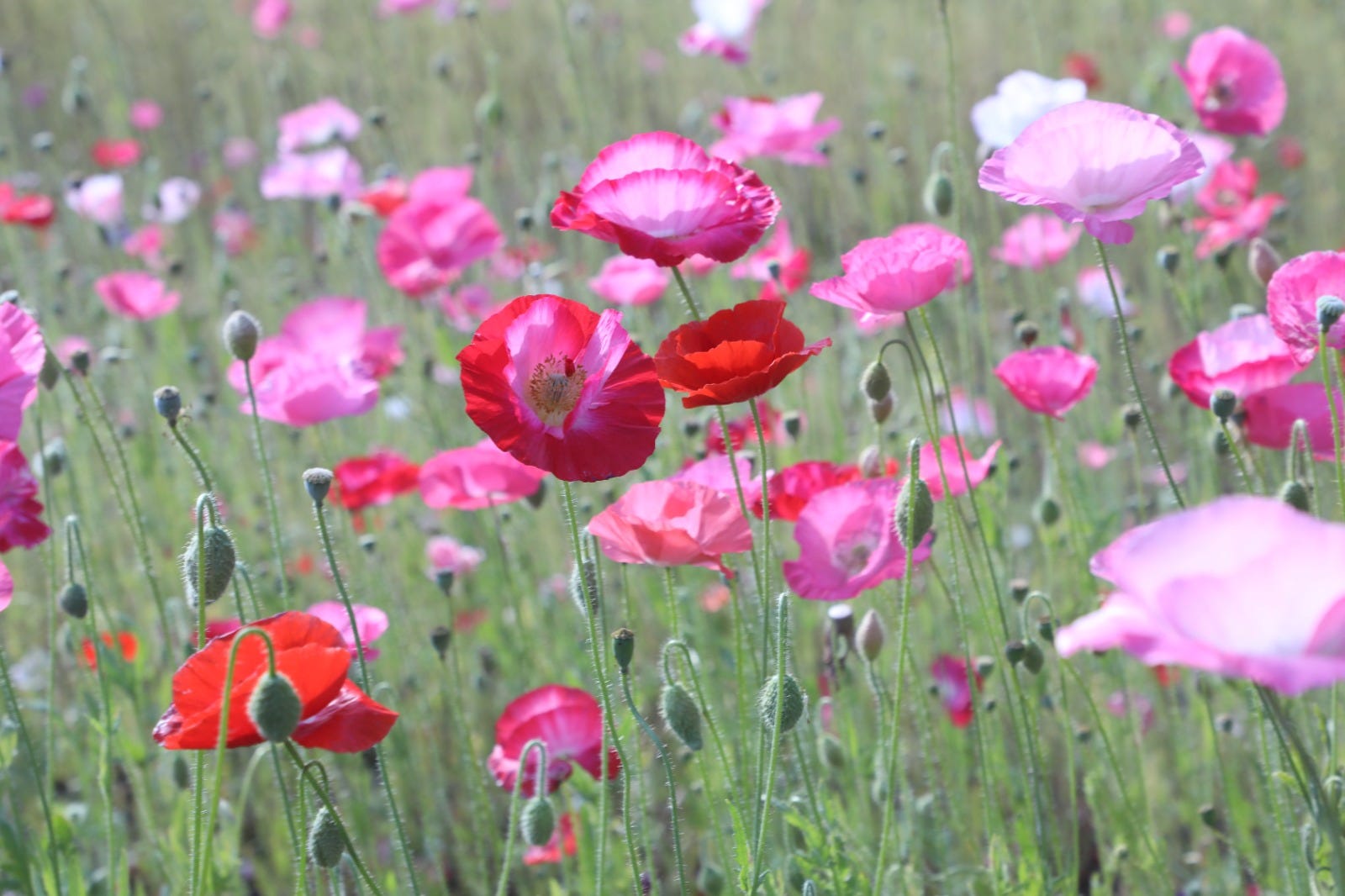
Liliana: “Summer Aroma” is especially important to me. It began with poppies. They were the inspiration for the piece, reminding me of the green hills filled with red poppies that I often saw and admired as a child in Romania.
It was my first gallery-size piece. I had been experimenting a lot with building flowers out of glass, and this was the piece where I finally managed to lift the petals up off the canvas.
It also took the main spot in my house, above the fireplace in the living room. With windows on both sides, I could watch what light did to the glass throughout the day. The piece became a moving, transforming work, with shadows that shifted from morning to evening.
Sanda: Light seems to be part of the work itself: the glass catches it, and the piece can look different throughout the day. What do you hope someone notices when they stand in front of it?
Liliana: My hope is that a person’s first feeling is joy. Beyond that, I hope they notice the light. As in photography, light can completely change how a piece shows itself, so the work looks different depending on when you see it and where you stand.
I also hope they see the fragility and strength that runs through my work. Glass flowers show just that: something delicate in form, made from a material that is sharp and can break.
Sanda: How has living in the Pacific Northwest shaped the colors, subjects, or atmosphere of your work? Do memories of Romania find their way into it too?
Liliana: The Pacific Northwest is a wonderful place to work with glass. We have the inspiration of the famous Dale Chihuly, and nature is everywhere. I live in the Evergreen State, and the green around me is part of my everyday surroundings. Flowers are my main subject, but I occasionally break the pattern and make ocean-inspired pieces.
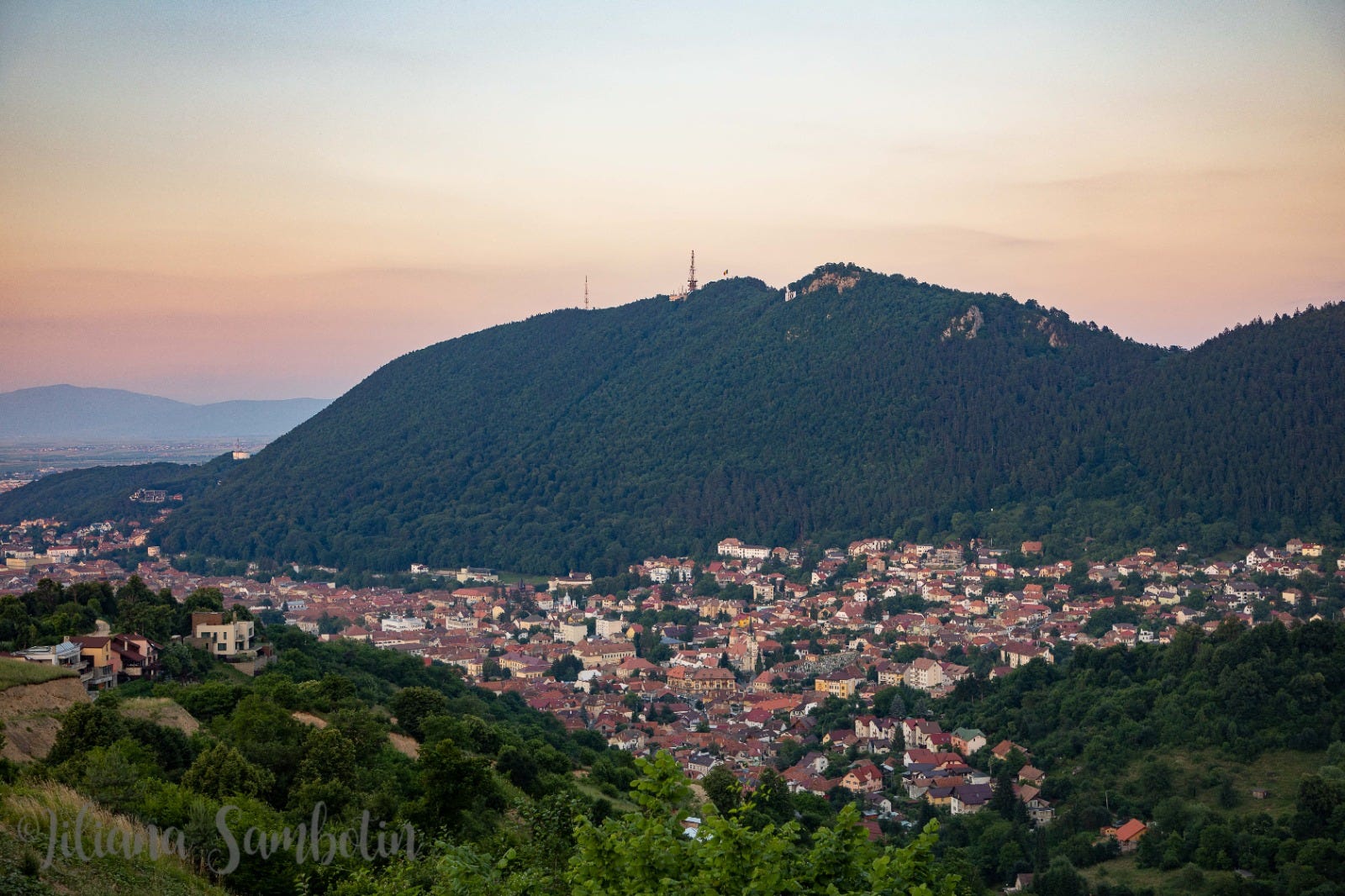
Romania is in my work too, and nature is what connects the two places. I grew up in a mountain town, surrounded by hills and green landscapes, and the red poppies I admired as a child found their way into Summer Aroma. Living in the Pacific Northwest, I’m surrounded by mountains and greenery again. The places are far apart, but nature speaks to me in both, and that keeps my two worlds close.
Sanda: What was it like to show your art publicly for the first time? Was there a conversation with a viewer that stayed with you?
Liliana: When I started showing my art at our local community art walk, I was scared, and I felt uncomfortable being in that position. My friend Debi was very supportive. For a while she came with me to almost every show, gave me great advice, and kept encouraging me. I still remember how many of my friends showed up at my very first one. It meant so much, and it was such an encouraging start.
Looking ahead
Sanda: What are you curious to try now that you might not have imagined when you first began working with glass?
Liliana: I know the path ahead won’t be a straight one. Between getting more visibility and improving my techniques, I already have a few ideas I want to work on.
One is moving my art outdoors, which means making it weather-proof. I love gardening, and I can see some of my art in the garden in the future. I’m also looking into bigger art shows, and I hope to move more toward gallery-style and gallery-size pieces.
When I first started working with glass, I couldn’t have imagined that I would end up building my own software to keep track of my pieces. Those computer science skills turned out to be useful in ways I never expected.
Sanda: When you think about the next few years, what do you hope to do with your art? What would you like to make possible for yourself?
Liliana: In the next few years, I hope to reach more people with my art. That means getting more visibility, showing in bigger venues, and continuing to grow my technique so I can bring my ideas to life at a larger scale.
More than anything, I hope my work brings joy and a moment of calm to the people who see it, whether in a gallery, in someone’s home, or one day in a garden.