

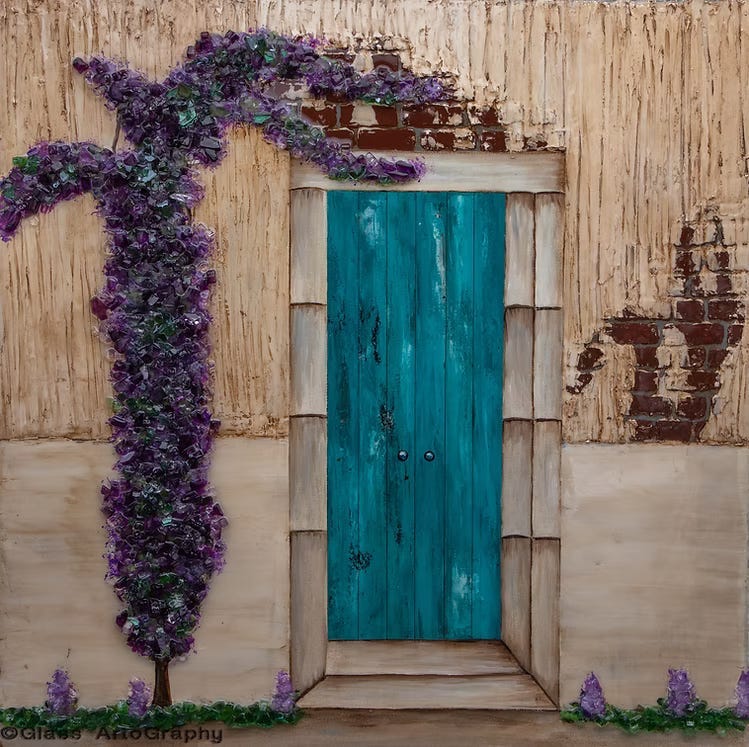
No one planted them.
That’s the thing people forget, or maybe never knew. They simply appeared one spring, the way certain things do - without permission, without explanation. A tendril at first, cautious and thin. Then two. Then the whole cascading rush of purple reaching across the stone, unhurried and certain.
The door came later. Or perhaps the door was always there and the blossoms simply decided, in their own time, to find it.
They grew through drought and through rain, through summers that bleached the wall to pale gold and winters that should have finished them. They didn’t ask about any of that. They moved the way water moves. Not toward anything in particular, just forward, just because forward was available.
People have tried to explain them over the years. A seed carried by a bird. A root no one thought to trace. But the blossoms were never interested in being explained. They just kept going, quiet and unhurried, the way things go when no one is expecting anything of them.
They don’t belong to anyone. They don’t mourn anyone. They grow because growing is what they do, reaching toward the turquoise the way any living thing reaches toward something bright. Not out of longing. Just out of habit, or instinct, or something that has no name yet.
The wall crumbles a little more each year, old brick showing through in patches like the building is slowly remembering what it was made of. The blossoms don’t notice. They were here before the door. They will be here after.
This is an excellent piece of prose. It brings forth the unyielding force of nature and articulates the tension between nature and culture—a millenium clash that exposes the limits of human construction, which, in the end, remain vulnerable to ecological forces.
Beautifully written. The contrast between the wall, slowly remembering what it was made of, and the blossoms, simply growing without intention or explanation, creates a surprisingly profound reflection on time.